What Is a Teaching Artist?
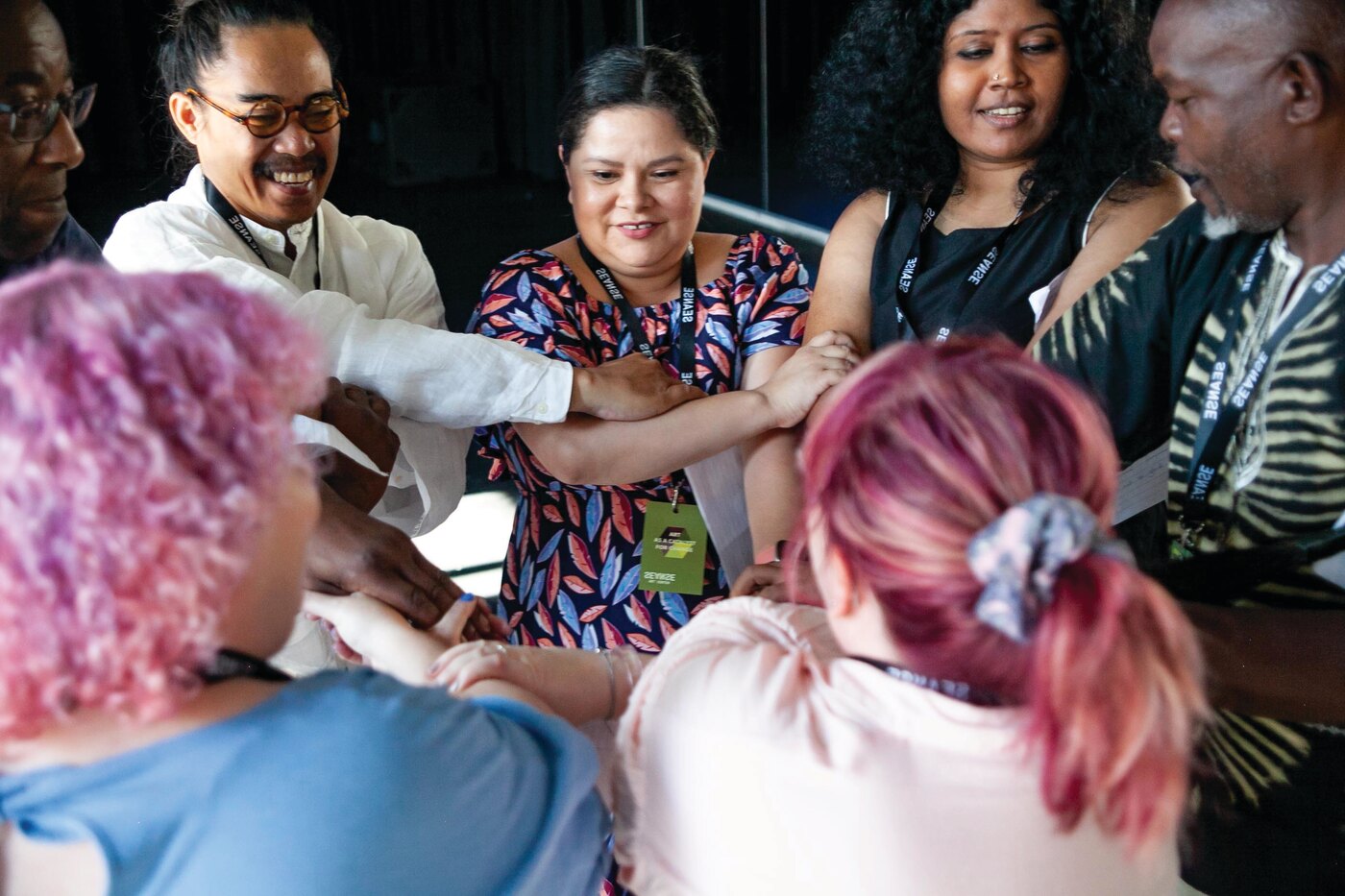
My own practical and reflective knowledge of teaching artistry stems from working on various art programs in kindergarten and public schools in Norway, beginning in 1993. In 2009, Eric Booth (USA) gave a keynote at Seanse's International Arts in Education Conference, and he introduced me to the term teaching artist.
A teaching artist is a professional artist with the competence to work in and through the arts in a community setting. She or he may be employed by an art institution, a school, or other community institution to work on a short or long-term basis. Teaching artists foster co-creation and creativity. They create hospitable spaces where play and collaboration take the lead.
Finding a name for the work led me to an inquiry into various types of teaching artist practice. In New York, I was introduced to long-term partnerships between the arts, schools, and communities, for instance at Carnegie Hall; DreamYard Art Center, a creative youth development organization; the Guggenheim Museum; and Lincoln Center Education, among others (Ulvund, 2015). Since then, I have visited great teaching artist work in Scotland, England, Australia, and South Korea.
The Magic of "Echo Theatre"
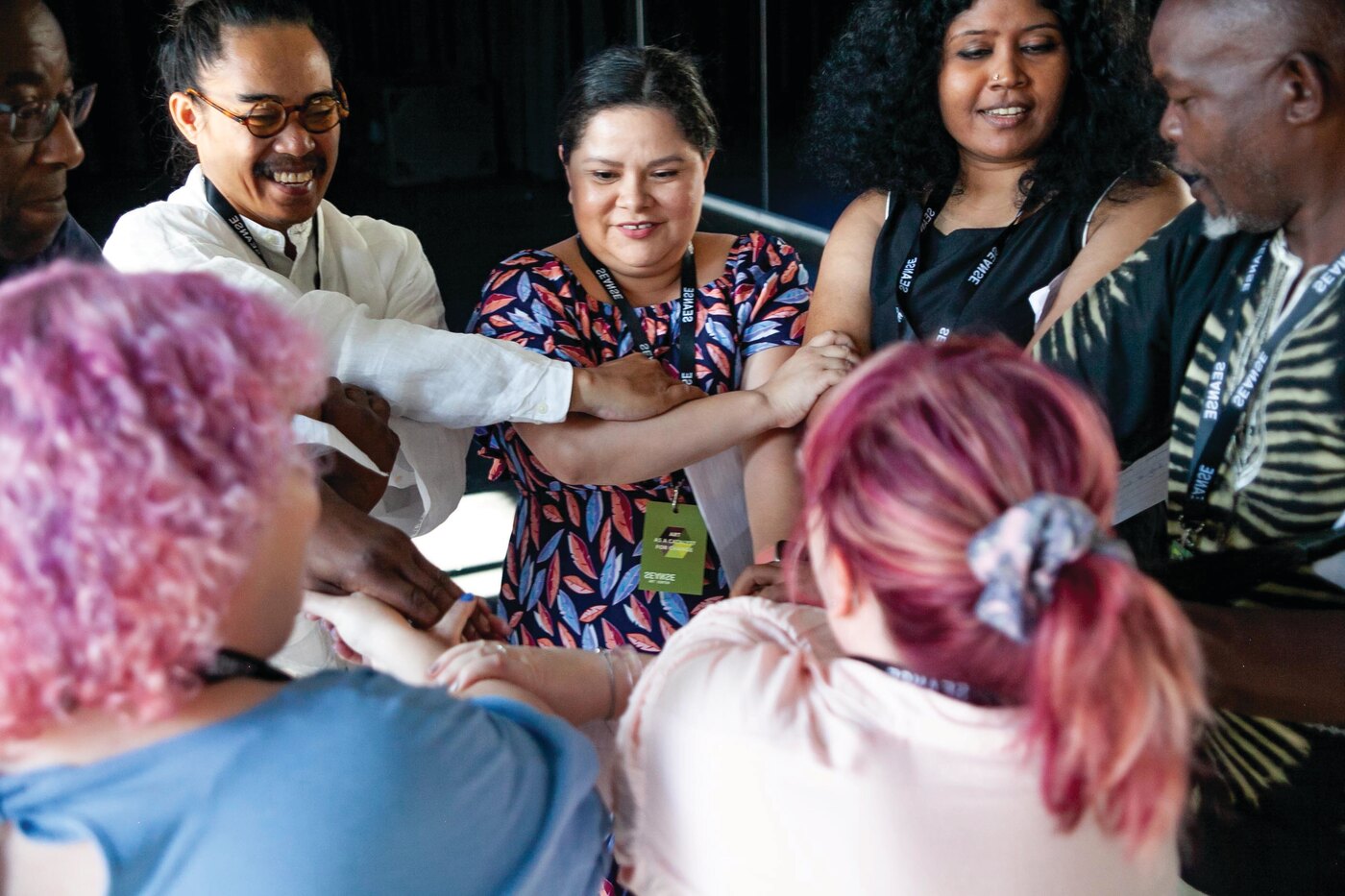
My PhD work on the method Echo Theatre is based on two fieldworks in a public school in Norway, with me as the teaching artist. Echo Theatre is a method that ignites students' imaginations, activates their bodies, and stimulates creativity. After we have staged one of my stories, I ask for a volunteer to tell about an experience or story: What happened to you? The story is told, and it may be short, as in this example, Mammy Lost Me! The student sits close to me, and I repeat to the class if needed for them to hear.
- The Narrative — I ask questions if needed, as we did in the above example, and we agree on the narrative.
- The Staging — together we agree on who and what is needed to stage the story, and then we start the rehearsal with fellow students as actors of people, props, and scenery.
- The Performance — of the story told and agreed upon.
- The Closing — after the staging, I ask the storyteller if this was an okay echo of his or her story. Sometimes we decide the story needs a different ending or is missing something, and we then revise and perform the story again.
During the echo theatre fieldwork for my doctorate, I interviewed the classroom teachers to include their comments on the work. The aim of my fieldwork was to study echo theatre's characteristics, and I expected the teachers' observations to focus on these attributes. Surprisingly, the teachers highlighted "the way you do it" as essential to the success of practice. They observed that the "creative atmosphere" did more than teach students how to act; it "stimulated imagination" and "freed fantasy." The teachers' observations and comments led me to further inquiries into the teaching artist's role in echo theatre practice, and studies on teaching artist competence on a more general level.
Creating with the Body
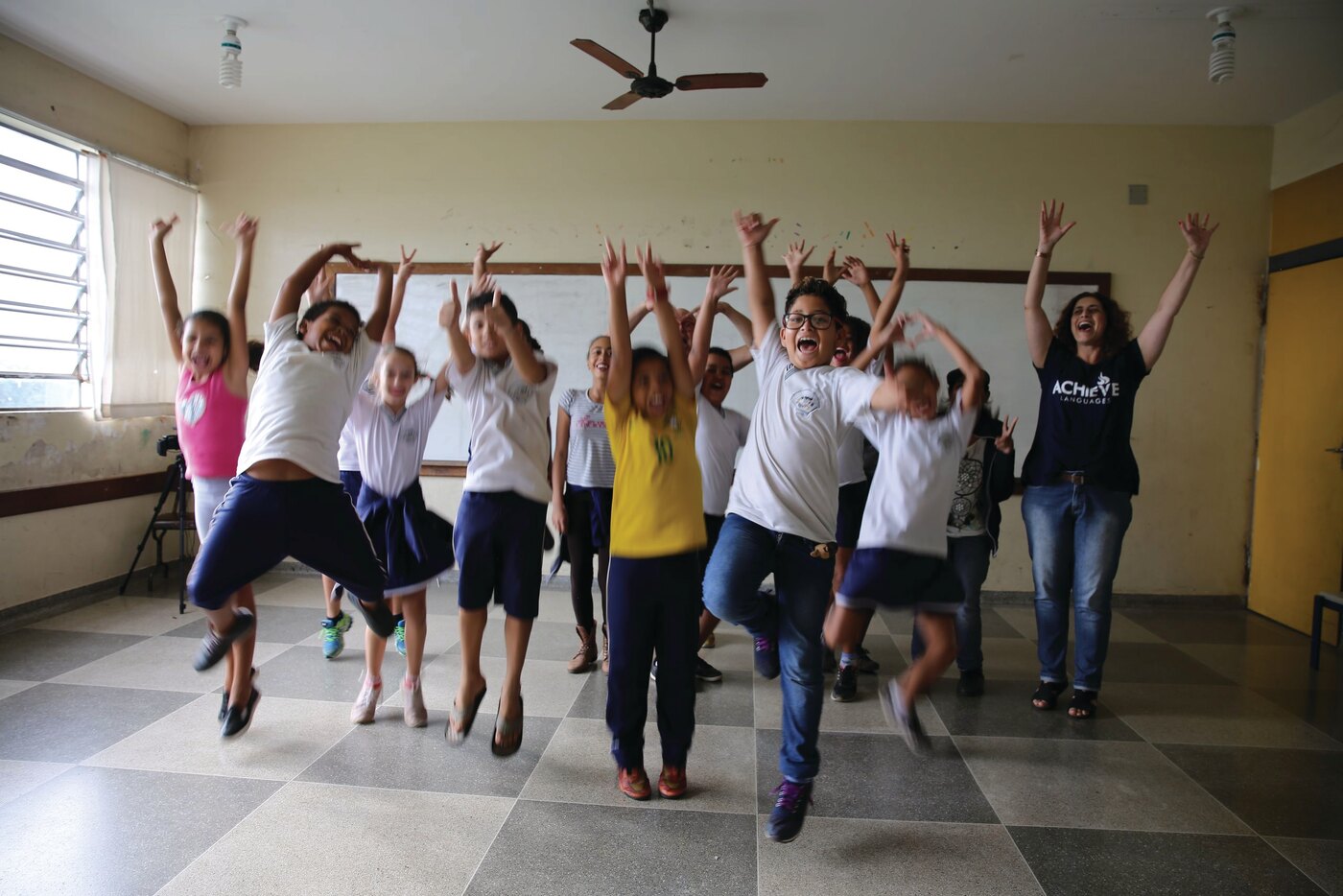
Most creative artwork involves using, creating, and learning through the body. One of the major outcomes of working with echo theatre is learning narrative structure through the performing body. The teacher-observers commented on my physical and embodied work. Initially, the teachers observed that the children seemed to experience echo theatre as play and found this a good way to learn. However, at the end of the project, they reflected on how the children had developed, grown in storytelling skills, and had attained so much confidence in the setting. They highlighted the effects of the embodied and playful work and commented on my role as teaching artist as "free" and noted the open structure, including improvisation, lots of action, and physical activities, "even some noise." Initially, the teachers commented on this as more noise than they would have tolerated, but ultimately, they concluded that this free and open method of teaching had been a condition for the work's success.
As a teaching artist, I aimed at bringing wonder and curiosity to the room and to activate the students' body-mind as an entity.
What did I — as a teaching artist — bring to the classroom? All my sessions were well-planned, but working with the children, I needed to be open to ideas and able to improvise and co-create. When performing the echo theatre stories, I might suggest to a child how to act like a moving car, but I also encourage the child's own experimentation and welcome solutions other than my own. Leading others in creative processes requires creativity on a personal level. For teaching artists, being open to improvisation is vital.
The concept of material thinking in the arts is that the materials we use and the embodied processes in which we engage have their own intelligence. This includes everything from a musical instrument to a paintbrush to our physicality and physical presence. This is certainly true in echo theatre. The body interprets, learns, and reflects!
Teaching Artists at Work
The teaching artist's artistic practice and skills in working with young people are both paramount to their effectiveness. The researchers Graham and Zwirn (2010) examined the educational dynamics of 16 teaching artists, and they identified the following as common approaches that support quality learning and engagement:
- Integration of Artistic Practice — Allowing their own personal artistic methods and mindsets to significantly inform their classroom instruction.
- Disruption of Predictability — Moving away from standard, rigid schooling approaches to create "unstructured and hospitable" environments.
- Studio Thinking — Applying a studio-based mindset to the classroom to foster organic learning.
- Relational Environment — Prioritizing spaces characterized by play, conversation, and collaboration.
- Intentional Planning — Knowing how to structure creative work while keeping it meaningful for the students.
- Adaptive Instruction — Supporting student engagement by utilizing various learning styles.
Teaching Artists and the Future of Education is a comprehensive 3-year research project by Rabkin et al. (2011). They found that the characteristics of effective teaching artists include:
- Student-Centered Pedagogy — Focusing the educational experience on the needs and perspectives of the learner.
- Holistic Development — Balancing the cognitive and social aspects of learning by providing intellectual, emotional, and social support to students.
- Positive Role Modeling — Functioning as a mentor and role model while sharing expertise (cited as important by 92% of teaching artists).
- Relational Attitude — Maintaining a supportive attitude and a strong personal relationship with participants.
Teaching artistry is both a field of practice and a profession. Organizing as a field supports individual teaching artists in their work and advances the field of teaching artistry.
A Global Movement
The potential of teaching artistry inspired me to initiate The First International Teaching Artist Conference (ITAC1 Oslo) in 2012, in close collaboration with Eric Booth. The ITAC network stemming from this conference has continued to grow with biannual conferences: Brisbane (2014), Edinburgh (2016), New York City (2018), Seoul, South Korea (2020), Oslo, Norway (2022), Auckland, New Zealand (2024), and coming up in 2026: Antwerp, Belgium. The interest in teaching artistry and my work has benefited significantly from being involved in leading this network, consisting of about 4,000–5,000 teaching artists today.
In Conclusion
When my two oldest boys were 2 and 3 years old, they asked me to write a poster. The eldest gave me the text: "Welcome to the theatre! There will be something funny, something scary and something a little sad." Then the boys, dressed in costumes, performed a long sequence without a clear beginning or end for their audience (grandma, aunty, dad, and mum).
Creative play and free exploration of situations and roles are fundamental to our development. This is the basis for us understanding both ourselves and others, and for learning. Creativity, communication, critical thinking, and collaboration are considered essential future skills. Education for the future needs interactive learning programs, and teachers and teaching artists that acknowledge and activate the body-mind (Ulvund et al., 2024).
Without this constant drive for wisdom and for recreating the balance between the outer and inner world — between the individual person and the sea of people — man cannot realize himself.— Václav Havel, playwright and first President of the Czech Republic