The room goes quiet when Bonnie steps forward.
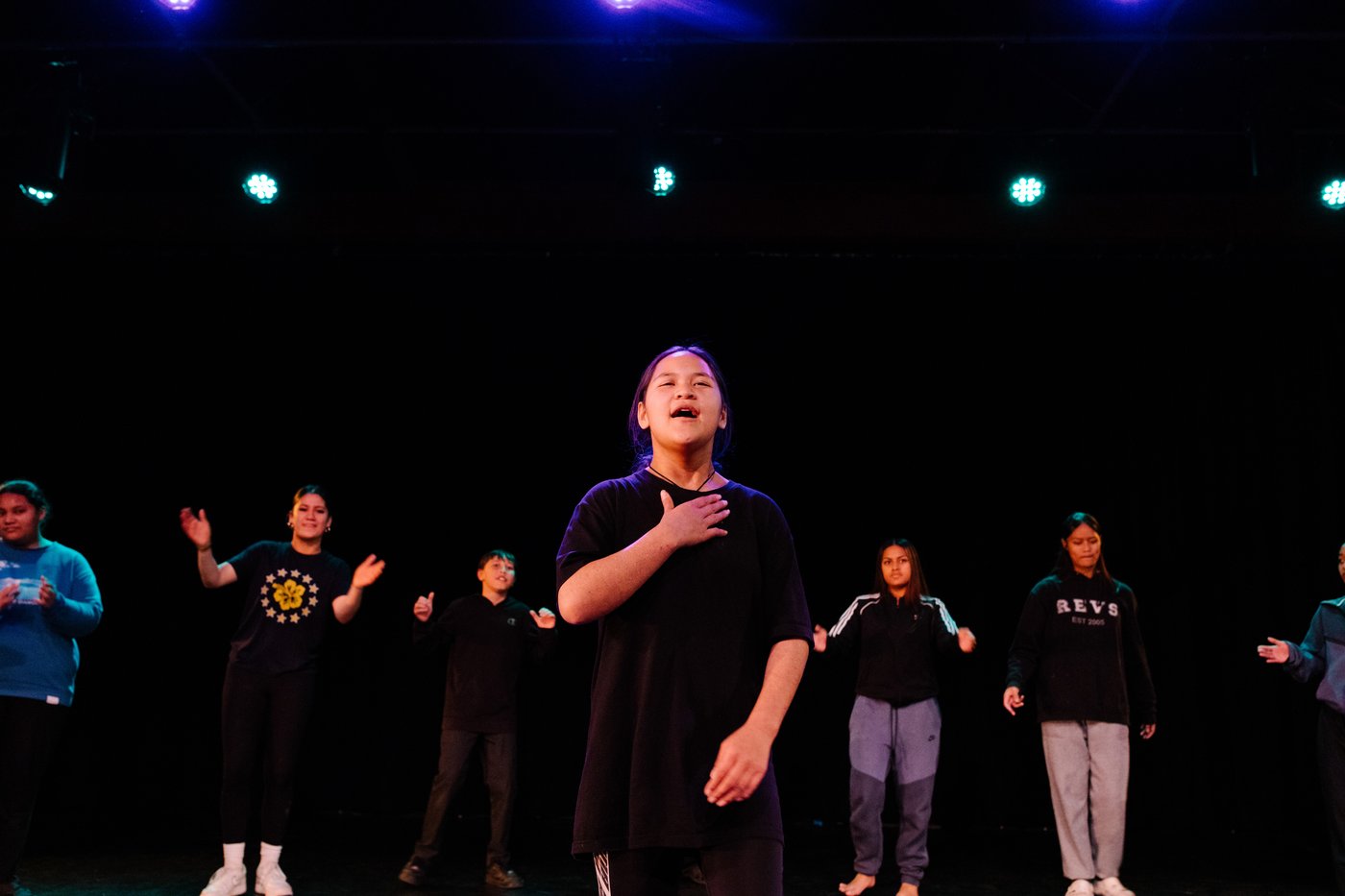
Stage lights warm her face. Her hands rest calmly at her sides. She scans the crowd, finds her whānau (family), and smiles. Then she begins.
Her voice is steady. Clear. Strong.
Bonnie is 16 years old. One year ago, this moment would have felt impossible.
Back then, Bonnie kept to herself. At school, she sat alone, avoiding eye contact. Group work made her anxious. If attention turned her way, her eyes dropped to the floor. Teachers saw an isolated student who needed one-on-one support. We saw a young Māori (Indigenous to New Zealand) girl who needed space to express herself differently.
Bonnie carried big feelings with nowhere safe to place them.
Then she walked into one of our wānanga (immersive learning spaces).
What She Walked Into
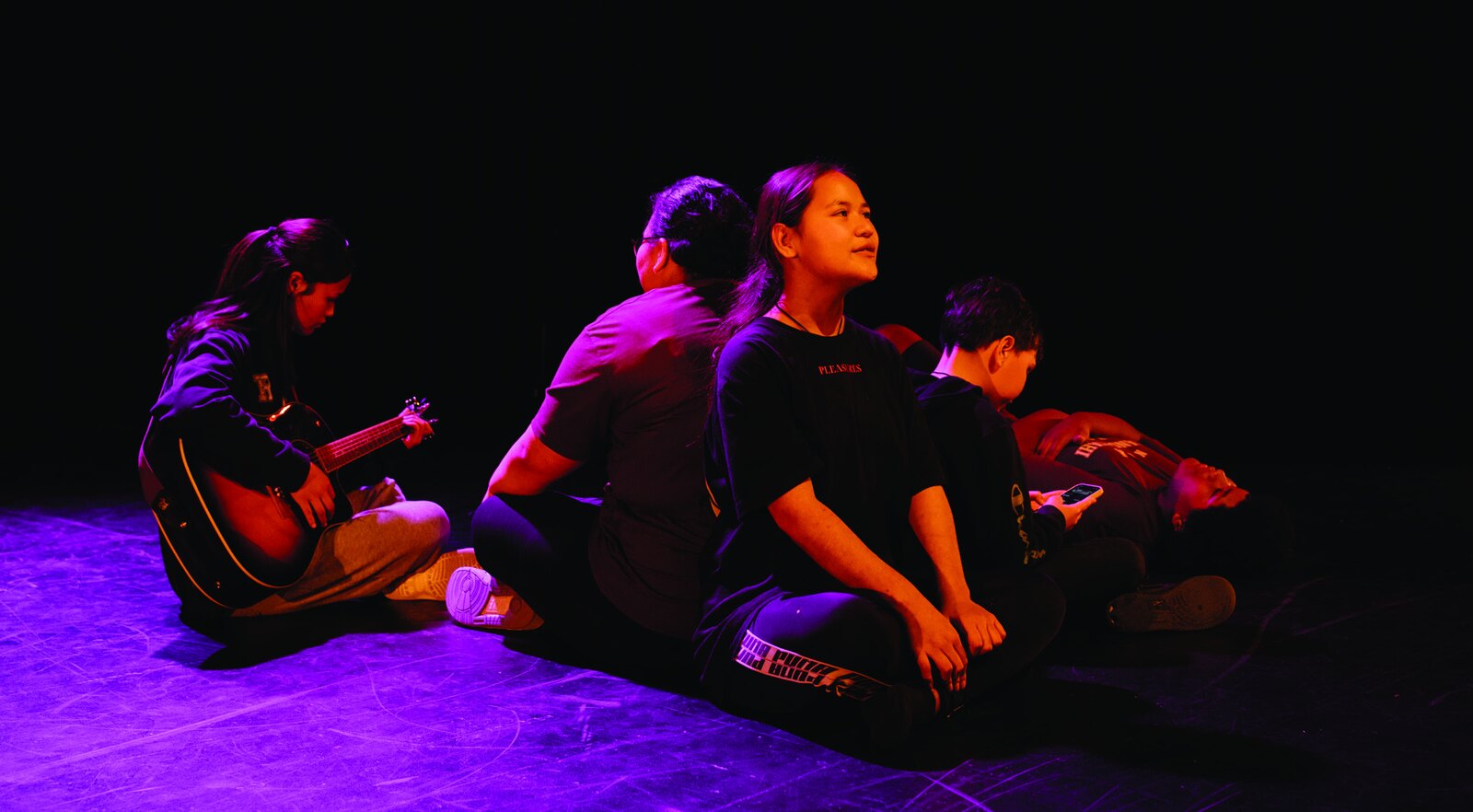
Shoes off at the door — the smell of kai (food) in the air. Deep belly laughs rolling through the room. Māori waiata (songs) are playing in the background. Artists sharing ideas, quietly wondering how they will be received. Rangatahi (young people) yarning, figuring out their place in the space.
Everyone carries nerves. Everyone wants to belong.
No one asked Bonnie to perform. No one put her on the spot.
She watched. She listened. She stayed.
That was enough.
The creative process moves at the pace of the young person. That boundary is protected. This space is not about ego. It is about curiosity, exploration, and young people finding their own flow.
Trust forms. Relationships build. Skills come later.
Small Beginnings
Bonnie began with small things. Drawing in her notebook, a space where she felt whole. Practising waiata (song). Learning rhythm through taonga pūoro (traditional Māori musical instruments). Moving with others in kanikani (dance), where no one stood alone.
Early on, she kept her notebook close to her chest. She drew quietly, often seated by herself, content with her pen and paper.
A youth worker noticed. Sat beside her. No pressure. Just presence.
"Your pictures matter," they said. "Take your time."
Week by week, something shifted.
Her posture changed. Shoulders lifted. Eye contact was held a little longer. She began offering ideas. Then volunteering for parts. Then, helping others remember their cues.
Confidence did not arrive all at once. It grew through safety, encouragement, and risk. Through quieting the negative voice and choosing to believe she could move through doubt.
The Language She Did Not Know She Had
Bonnie had stories she did not know how to tell.
Creative practice gave her language.
Through theatre, she spoke emotions that felt too heavy for everyday conversation. Through movement, she released the tension her body had been carrying. Through waiata (song) and haka (group performance combining movement, rhythm, and chant), she experienced culture not as a lesson, but as something deeply hers.
Later, she explained it better than we ever could:
"When I'm in that creative space, I'm safe. I'm able to share in a way I never thought I could in a school space."
Safety came first. Voice followed.
Expression became connection. Connection became belonging. Belonging became confidence.
The Ripples
The changes showed up everywhere.
At the kura (school), Bonnie began contributing in class. Teachers noticed stronger focus and participation. Group work no longer felt overwhelming.
She started putting her hand up. Then leading parts of group presentations.
As she put it: "I'm doing more leadership stuff at school, now that I have more confidence."
At home, her whānau (family) saw the shift. She talked about upcoming workshops at the dinner table. She practised moves in front of the mirror. She rehearsed lines in the shower.
In our space, she stepped into leadership. Welcoming new rangatahi (young people). Showing them what it means to belong.
Then came performance night.
A full house. Bright lights. That quiet moment before the first line.
Bonnie did not shrink.
She stepped forward and claimed her place in the light.
Why This Works
Many rangatahi (young people) move through systems that were not built for how they learn or express themselves. Some carry trauma. Some feel culturally disconnected. Many learn to stay silent. Creative Māori spaces meet them differently.
Here, Te Ao Māori (the Māori world view) is lived. Expression is safe. Relationships come first.
Young people create their own stories. They stand in them. They share them on their terms.
This strengthens wellbeing in visible ways:
Wairua (spiritual wellbeing) grows through identity and purpose. Hinengaro (mental and emotional wellbeing) strengthens through expression. Tinana (physical wellbeing) grounds through movement and performance. Whānau (family and relational wellbeing) connections deepen through shared stories of kinship.
Confidence stops being abstract. You can see it.
Creativity reaches rangatahi who disengage elsewhere. Performance builds discipline, teamwork, and collective pride. Cultural expression strengthens belonging. Safe spaces unlock voice. Voice builds leadership.
The Quiet Work of Holding Space
Bonnie still gets nervous sometimes. That never fully disappears.
But now she knows how to breathe through it. She knows she belongs. She knows her voice matters.
When new rangatahi arrive and linger at the back with their hoodies up, she recognises the look. She walks over. She is not a big talker, so she simply sits beside them and holds space until they are ready.
Someone once did that for her.
Now she does it for others.
Creativity is not a luxury for young people like Bonnie. It is a necessity. It is infrastructure for wellbeing.
When rangatahi create, they find their voice. When they find their voice, they build rangatiratanga (self-determination). When they build rangatiratanga, they lead.
Not all leaders stand at the front.
But when it matters, Bonnie steps forward and into the light.