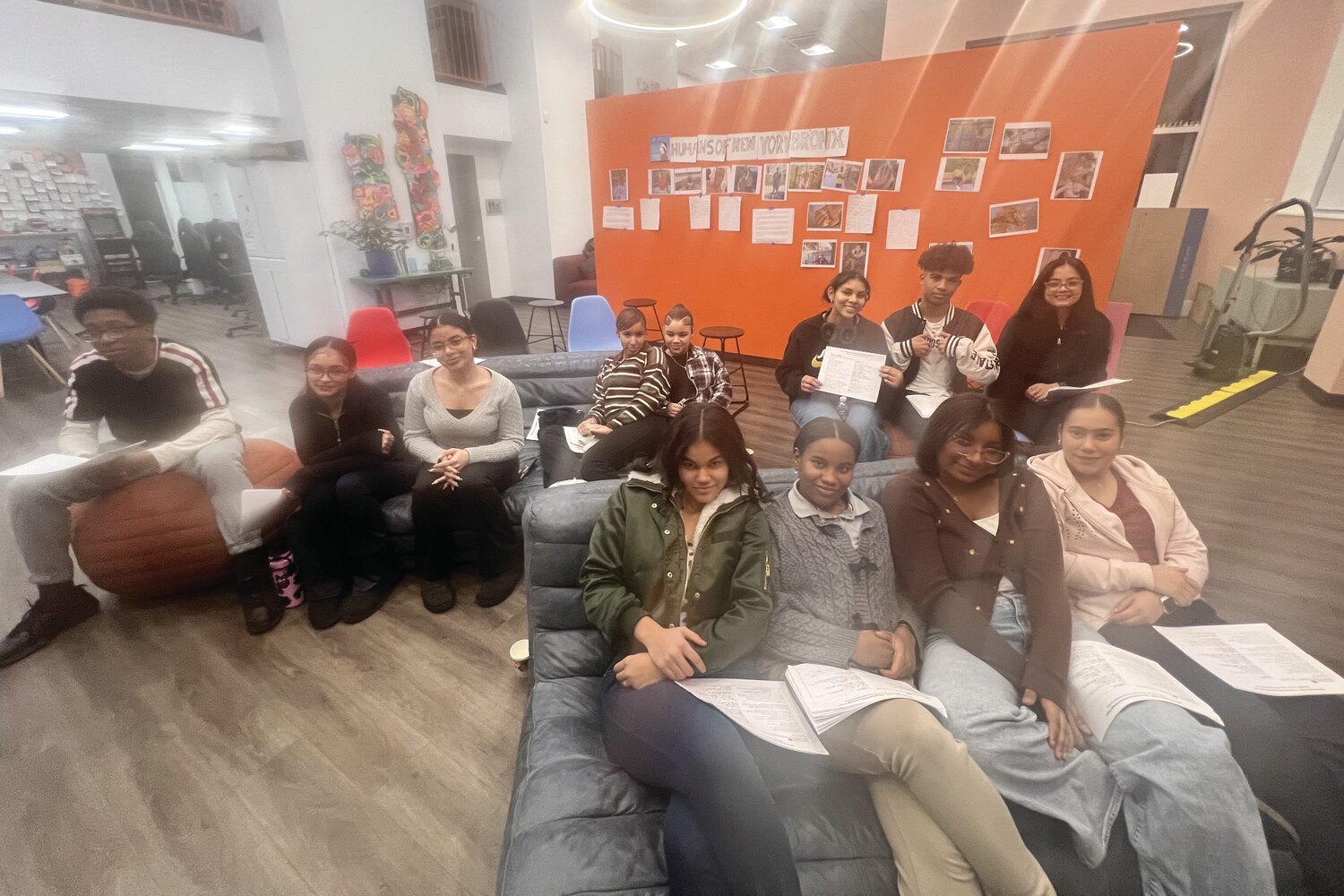
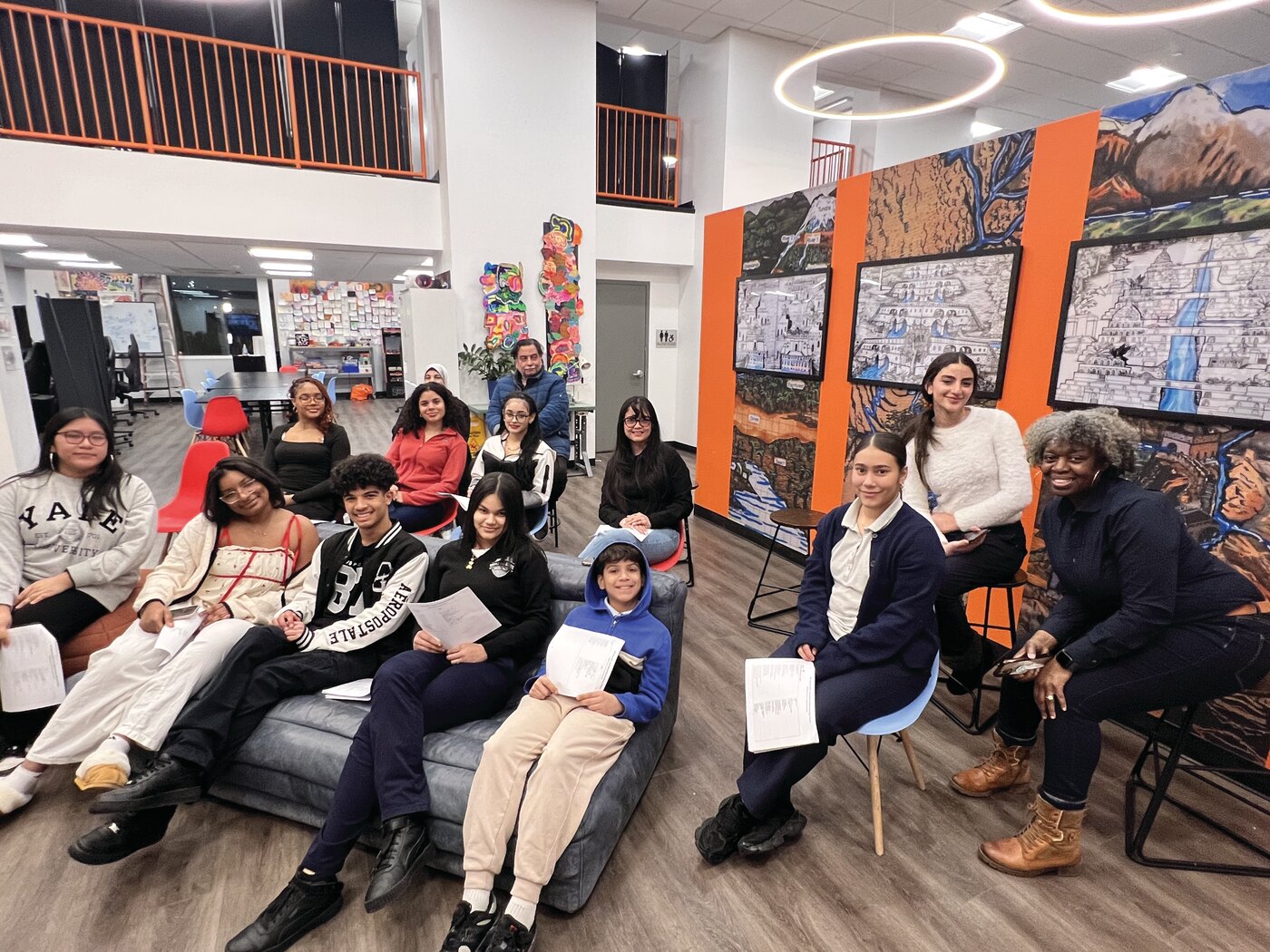
"10 minutes until showtime! Finish up with dinner and let's circle up in the back," we holler to the teen poets who are sprawled around the DreamYard Design Center in the south Bronx.
It is Friday night and they are crowded around tables in the café finishing up their tacos and reading through the poems they are preparing to share with other teen poets from around the globe. The weekend is just getting started and these young artists from Marble Hill School for International Studies are readying themselves to present their hearts and minds — to tell the truth about who they are and connect with other artists and dreamers from Japan, South Korea, Australia, and the Philippines.
The energy is strong as we play DJ and the sounds of Bruno Mars, Bad Bunny, and Black Pink rotate through the space. Students perfect their looks, their poems, and their presentations. They laugh, tease one another, and ask for endless feedback. They are nervous, excited, and full of such wonder and generosity. They are forever working to get better, sharper, to write poems brimming with figurative language and poems that illustrate who they are and what they care most about in the world.
They are not just high school students, they are activists, organizers, and artists. They are vulnerable, self-assured, anxious, and ready. They are teenagers just wanting their voices to be heard and most of all — valued.
A Bridge Across Borders
The International Poetry Exchange Program (IPEP) was founded by Caroline Kennedy, then U.S. Ambassador to Japan, in 2014 as a way to build bridges for students around the world. As a founding partner, The DreamYard Project worked with schools across the Bronx to write poems, create performances, and eventually compete in an international poetry slam. As a community, we have traveled to Japan, South Korea, Australia, and the United States.
Over these last 12 years, our questions remain the same: What does it mean to be a global citizen? How do you build a community of young people from around the world? How do you share your identity, culture, and stories from home to push against stereotypes? What does a global community look like, and how do we nurture it when we return home?
This is the work of global community building, of being consistent and resilient in the face of our changing and chaotic world. It is the work of being in dialogue with teenagers from around the world about who they are, where they come from, what keeps them awake at night, and what they are willing to stand up and fight for.
The Prompt
The prompt for our most recent sharing was this: Write about the place, history, and/or culture of where you live. We would love poems that talk about your country, city, neighborhood, hometown, home, or favorite place. We want to know more about where and how you live. Personify your hometown. Give it characteristics or a personality. We want to know everything we can about your place of origin. Write it into existence!
We ask students to think of their poems as a way for us to continue to get to know one another. The more we know, the better we can connect and build alongside one another.
Why This Matters
DreamYard recognizes that to thrive in an increasingly interconnected world, young people need to develop the knowledge, skills, and attitudes to engage in lifelong, cross-cultural learning and collaboration. Young people need the 21st-century skills for global competency, digital literacy, critical thinking, and collaboration among local, national, and international peers.
While new technologies provide powerful tools for engaging learners with the world around them, technology alone will not build their cross-cultural understanding and intercultural competencies. Face-to-face experiences must be linked to virtual learning to create instances of empathy and collaborative action. Proven cross-cultural exchange learning models like IPEP are needed for educators to guide their students in understanding how to use new media, technology, and travel to explore global issues, connect with peers, and take action on mutual concerns.
Our current program works with six schools: Marble Hill School for International Studies in the Bronx, New York; Poongsan High School in Andong, South Korea; St. Scholastica in Manila, Philippines; Gotemba High School in Mt. Fuji, Japan; Itoman High School in Okinawa, Japan; and Bonnyrigg High School in Sydney, Australia.
Back at the Design Center
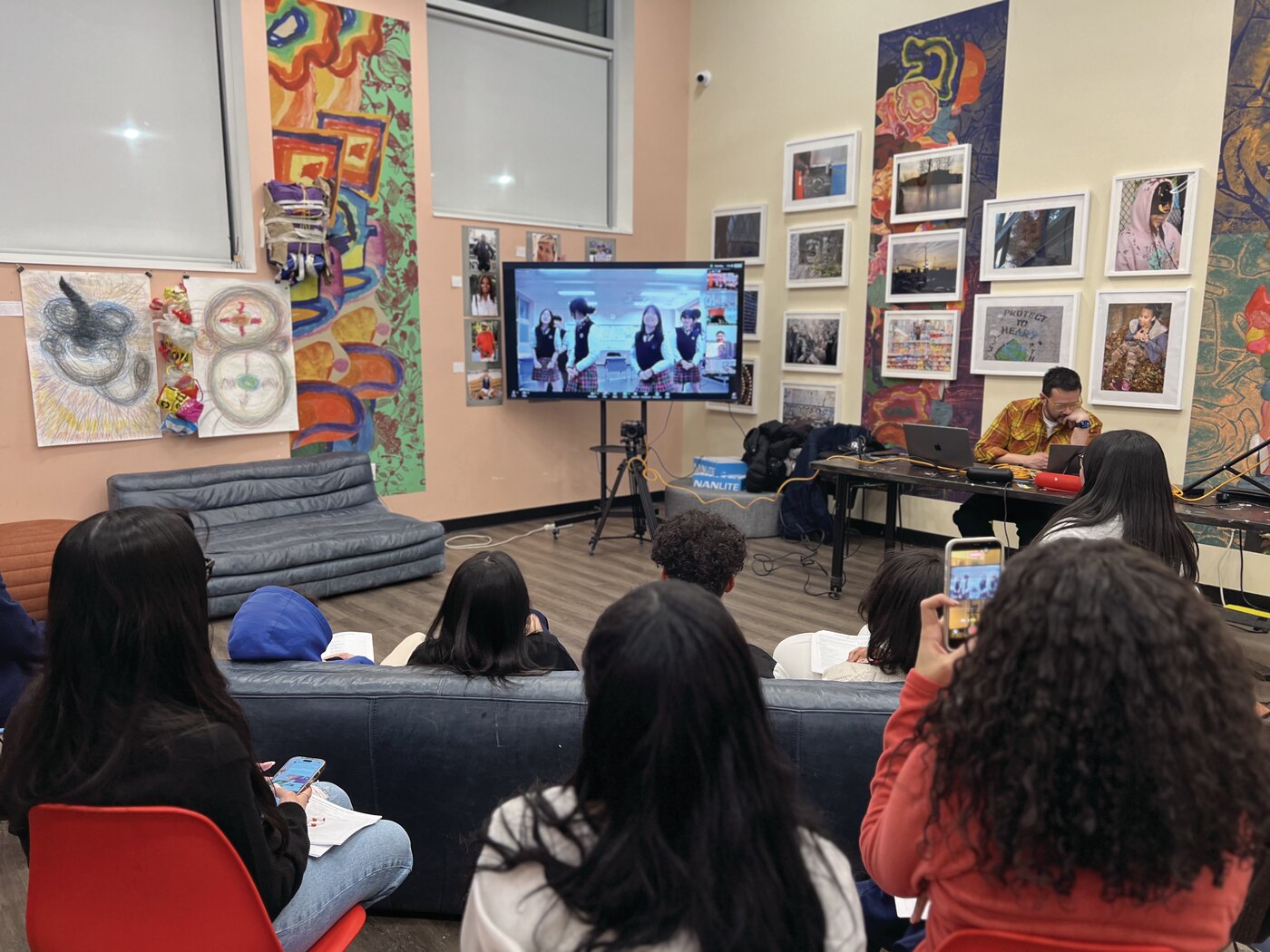
Back at the DreamYard Design Center, our student hosts Vereny and Roberto kick off the night with their own poems. They are well rehearsed and confident in front of the camera. We take turns going from country to country with students standing in front of this global crowd sharing their poems. They are brave and steady. Roberto's mom asks if she can join the group and read a poem about the Bronx too. Malak, our new student whose family is from Egypt, brings her mom and dad. Her dad cheers when she shares and tells her next time she should share her poem in Arabic.
We hear Spanish, Tagalog, Japanese, English, and Korean over the course of the event. Languages and stories merging — becoming a thread that ties us all together.
At the end, the students from Poongsan in South Korea practice a K-Pop song for their upcoming talent show and suddenly everyone is on their feet. Dancing, laughing, and singing loudly over each other. They are full of such energy and heart. And for all of us as educators, there is hope and joy alongside them. This community, this bridge, this global homecoming.