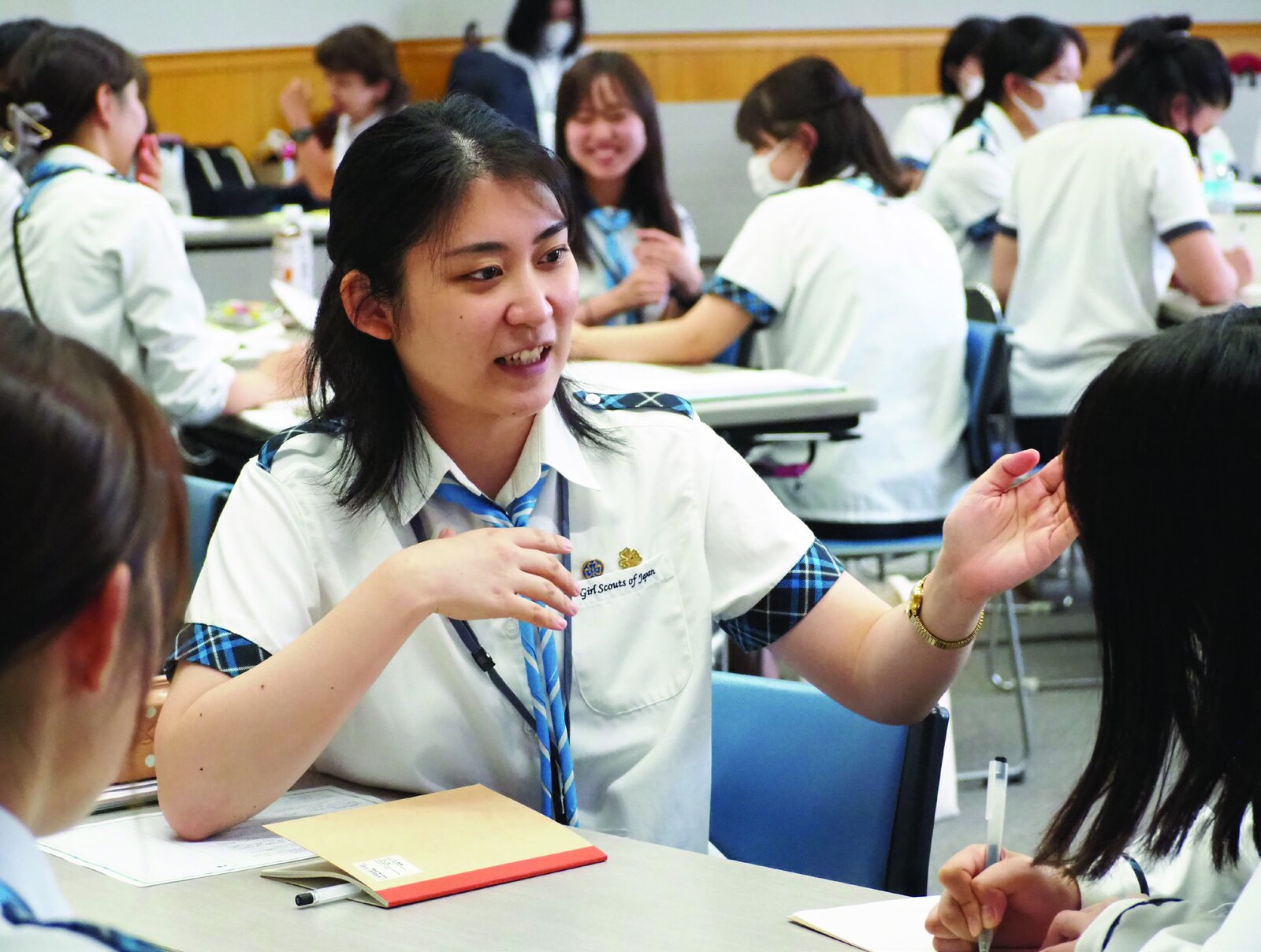
The Creative Challenge Program has been one of the most unique experiences in my 20+ years as a Girl Scout.
One reason is the role of the young adult members involved in the program. Instead of being called "Leader," we are called "facilitators," and most of us are in our twenties. In the program, Girl Scouts use design thinking to express creativity, generate new ideas, build self-confidence, and take action in their communities. As facilitators, rather than teaching step-by-step instructions or giving the "right" answers, our role is to support Girl Scouts so they can deepen their own understanding and engage in the program in their own way.
Starting from a Five-Meter Radius
Another defining feature is that we do not start with a predefined problem such as the global challenges related to SDGs or current social issues our countries are facing and debating to find the solutions. Instead, we begin by identifying challenges from within a five-meter radius of our own lives — by noticing what people around us might be struggling with. From there, we do not simply apply existing solutions. We explore new possibilities by combining everyday tools and ideas, discovering creative approaches that did not exist before.
In a world where the internet and generative AI can provide instant answers, I believe it is becoming increasingly important to develop the ability to ask our own questions — and to feel comfortable in uncertainty.
Through this program, both Girl Scouts and facilitators are invited to embrace that uncertainty and create something new. It can be challenging, but it is also deeply exciting.
Designing the Program Itself
The program is designed for Senior Girl Scouts (middle school) and Ranger Girl Scouts (high school age), and is conducted as an intensive two-day, overnight experience. The process of building the program itself was also a creative journey. Working alongside fellow youth facilitators, we continuously asked ourselves:
"How can we make this easier to understand?"
"What kind of words or methods would resonate more with Girl Scouts?"
For example, we suggested adding an energizer activity after a long-seated session so that all members could refresh their minds. Being close in age to the Girl Scouts allowed us to notice these details, and to turn our ideas into something tangible together. We also supported fellow youth members who were still developing their understanding of the program, learning together as we went. At the same time, we collaborated with Hana Lab to refine materials and improve the program year by year. The program grew through the collective creativity of everyone involved.
The First Year in Saitama
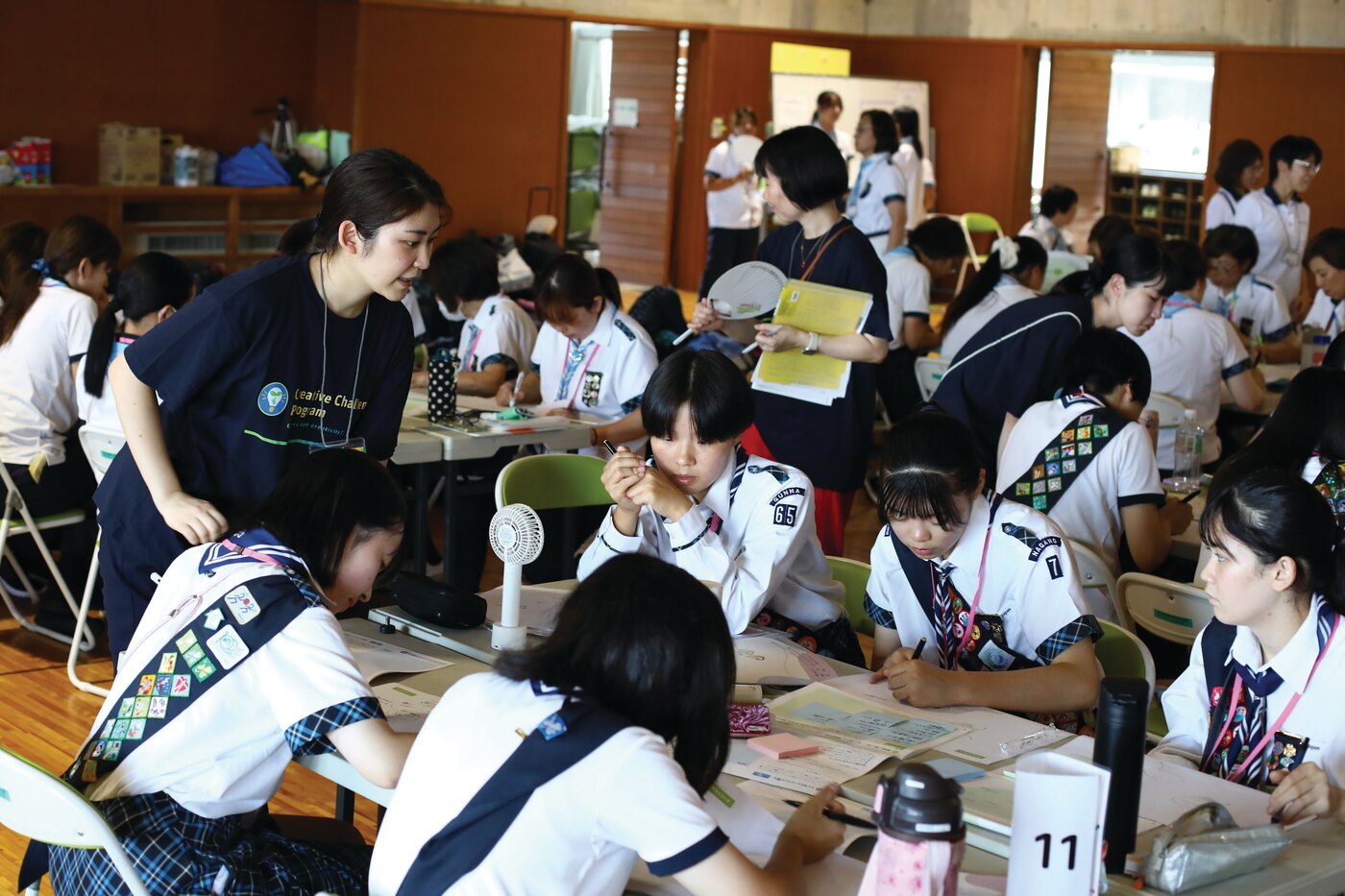
One moment that has stayed with me happened during the very first year, when I facilitated the program in Saitama. Because it was our first time running the program, many of us facilitators were quietly checking in with each other throughout the day:
"Are we doing this right?"
"Is this the right way to guide them?"
"How should we support the Seniors and Rangers?"
There was a sense of nervousness in the room, and I remember feeling uncertain myself. But at the very end, when the Girl Scouts presented their ideas, something shifted. They had followed the process we had hoped for and were expressing their ideas in their own words. In that moment, I felt a deep sense of relief, realizing: "It worked. It truly reached them!"
The feeling of accomplishment we shared as facilitators is something I still remember vividly.
Expanding Across Japan
In the following years, the program expanded to seven regions across Japan. I had the opportunity to facilitate in places such as Niigata, Miyagi, Nara, Miyazaki, Tokyo, and my home region, Aomori. One particularly memorable part of the program was the interview session on the first day, where participants explored the root causes of each other's challenges. This was often a difficult moment — not only for the girls, but for the facilitators as well, because what girls could hear through this interview would be the important essence to find what problems they would like to work on for two days. There was a sense of anxiety and hesitation in the room, as we wondered:
"How should I approach them?"
"What is the best way to support this conversation?"
However, something important happened during our reflection meeting that evening. Instead of focusing only on what did not go well, we also shared small successes — moments when a Girl Scout's expression brightened, or when a simple question helped move a conversation forward. The next day, I noticed more facilitators trying out those approaches. They seemed more confident, more present, and more connected with the Girl Scouts. Seeing that change made me realize that growth does not happen in isolation — it is strengthened and accelerated through learning from one another.
Girls who initially seemed unsure gradually became more engaged, sharing ideas that were often more imaginative than I had expected.
In those moments, I found myself thinking, "Wow, this is such a new idea I never would have come up with!" It expanded my own sense of creativity as well.
From Participant to Facilitator
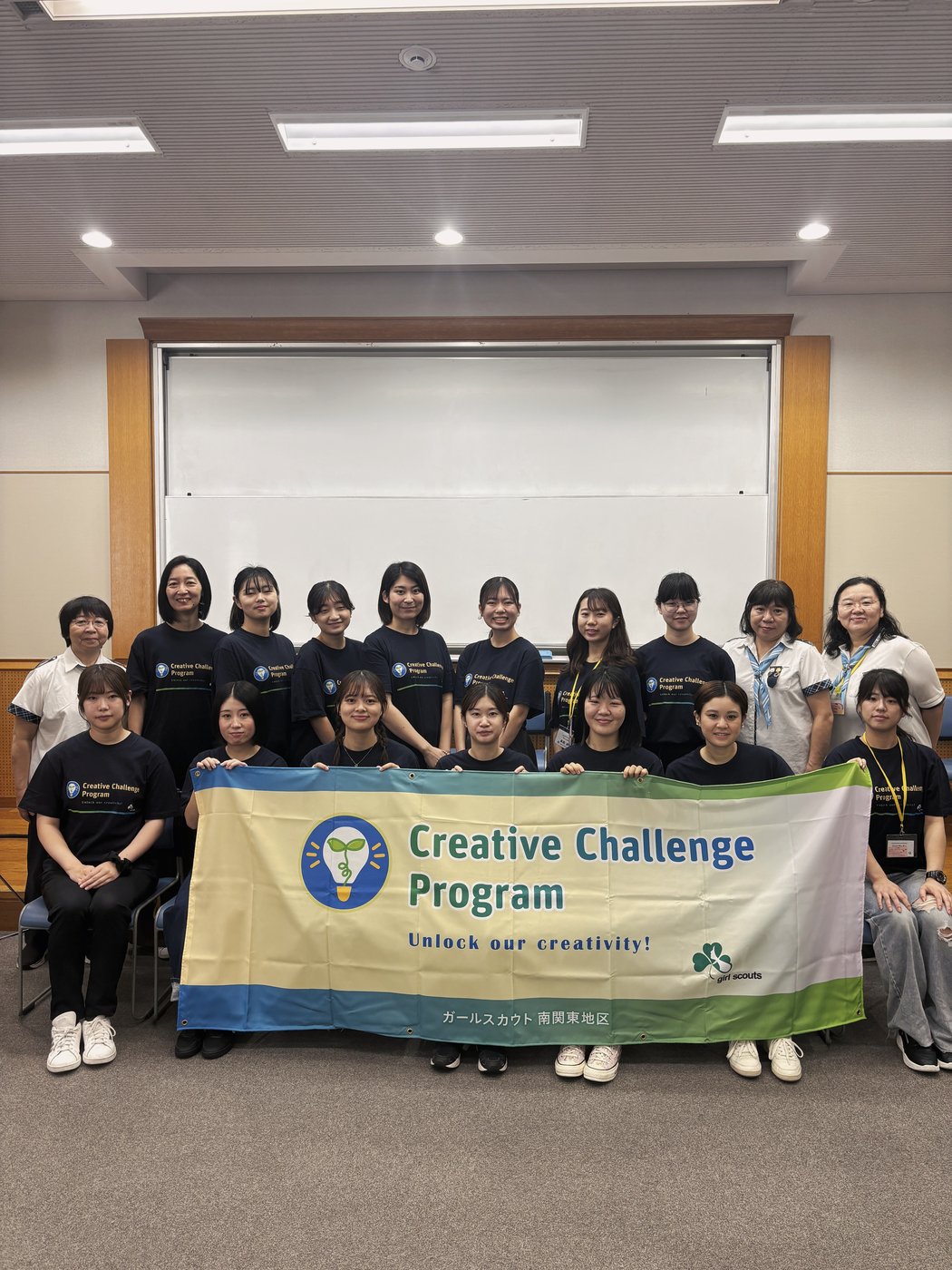
One of the most meaningful changes over time has been seeing former participants return as youth facilitators. With each session, facilitators grew more confident, standing in front of Girl Scouts with greater ease and presence. Many participants shared that they had discovered new ways of thinking and wanted to apply them in their daily lives. Some youth facilitators also expressed that being connected with peers across Japan motivated them to stay engaged in Girl Scouting.
Small Steps, Big Waves
Through this program, which is supported by Burberry Inspire and International Youth Foundation, I realized that nurturing creativity could inspire people to take action. In the World Association of Girl Guides and Girl Scouts, advocacy means "we influence people to make decisions that will improve our lives and the lives of others." Before, I thought this action should be on a big scale. But now, that begins with something simple — noticing someone close to us, understanding their challenges, and taking a small step to make a difference for them first.
Even a small step can grow into something bigger. And one day, it may become a wave of change, with our creativity.