Hello, Ezenwa. Thank you for being in conversation with me to share your work with the readers of Extensions Magazine.
It is a delight to share my work with readers of this great magazine. Thanks for having me.
Please orient Extensions readers to your work by describing the Street Project Foundation.
Street Project Foundation is a youth-serving organization based in Nigeria that uses creative arts to facilitate youth leadership development, social mobilization, and cross-cultural dialogue. We are at the forefront of using theatre to move beyond emotional catharsis and toward becoming a tool for community dialogue, actively challenging mechanical thinking, and rehearsing for revolutionary change.
We have reached over one hundred thousand youths (and counting) across Nigeria through our various interventions and initiatives such as the Creative Youth Bootcamp, Art for Social Transformation, Digital Amazons, Street University, ARTvocacy, Project ALAFIA, and Do What U Love Festival. We are one of the 2021 recipients of the Intercultural Innovation Award by the United Nations Alliance of Civilizations (UNAOC).
Our vision is that "we see a world with a critical mass of transformational youth leaders making a sustainable living doing what they love." Our mission is "to facilitate opportunities for amplification of youth voices through advocacy, media campaigns, and content creation using the creative arts."
Please tell us about the community of young people you work with and the kind of environment they're navigating.
Nigeria is a diverse country with continued civil strife and social dislocation. The population of over 242 million people includes 200 ethnic/tribal groups, 100 languages, and 100 different religions. Nigeria is often called the youngest country in the world because more than 75% of the population are under the age of 35. Street Project Foundation primarily works with young people ages 16–25 years. Our work inspires and influences young people to work towards peace-building, engendering social cohesion, pluralism, and aspire for an egalitarian society where everyone's human rights are respected, where there is a fair and level playing field for everyone to thrive — irrespective of tribe, ethnicity, gender, religion, and language.
That is an inspiring vision. What is your role at Street Project Foundation as you work to realize this vision?
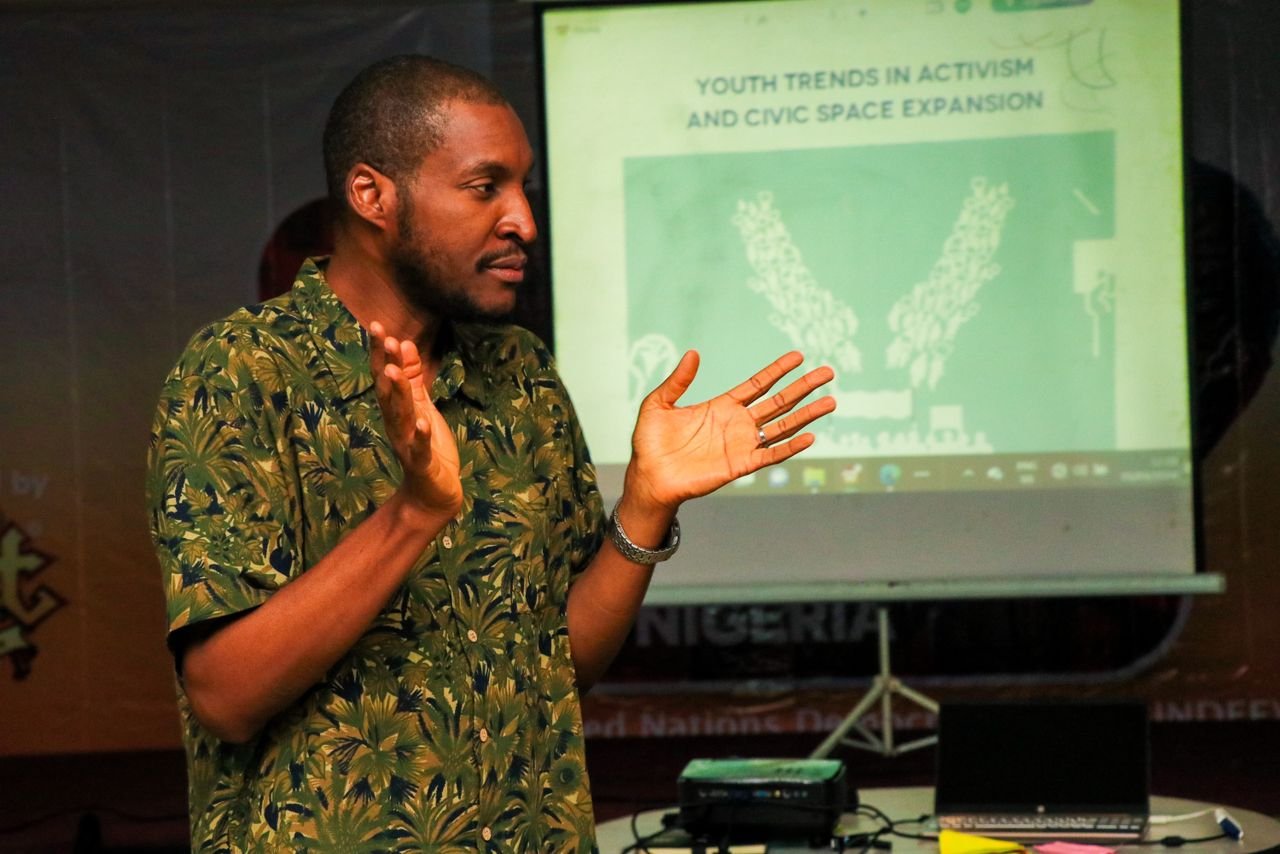
As programs director at Street Project Foundation, I focus on using the performing arts as a tool for facilitating social justice advocacy, civic education, and grassroots mobilization among young people. I am well vested in using music, dance, drama, poetry/spoken word, film-making, and theatre production in moving the needle on social transformation.
How were you able to secure support from the United Nations Democracy Fund?
The United Nations Democracy Fund became interested in our work after we won the Intercultural Innovation Award by their sister UN Agency called the United Nations Alliance of Civilizations (UNAOC). We participated in an open application process and were selected amongst thousands of applicants from across the world.
The interesting thing about our organization and the work we do is that we use the creative arts to bring down borders and to explore deep roots of polarization between societies and cultures. We are constantly researching methods and ideating new social constructs that could positively affect dynamics between people from different cultural backgrounds.
Our major motivation is the concept of "global citizenship". We are mobilizing ourselves and building our capacity to be able to fully become true global citizens in all its ramifications. We subscribe to the school of thought that states: "The world is my country, all mankind is my brethren, and to do good is my religion."
The work you're doing is so vital. What's at the top of your priority list right now?
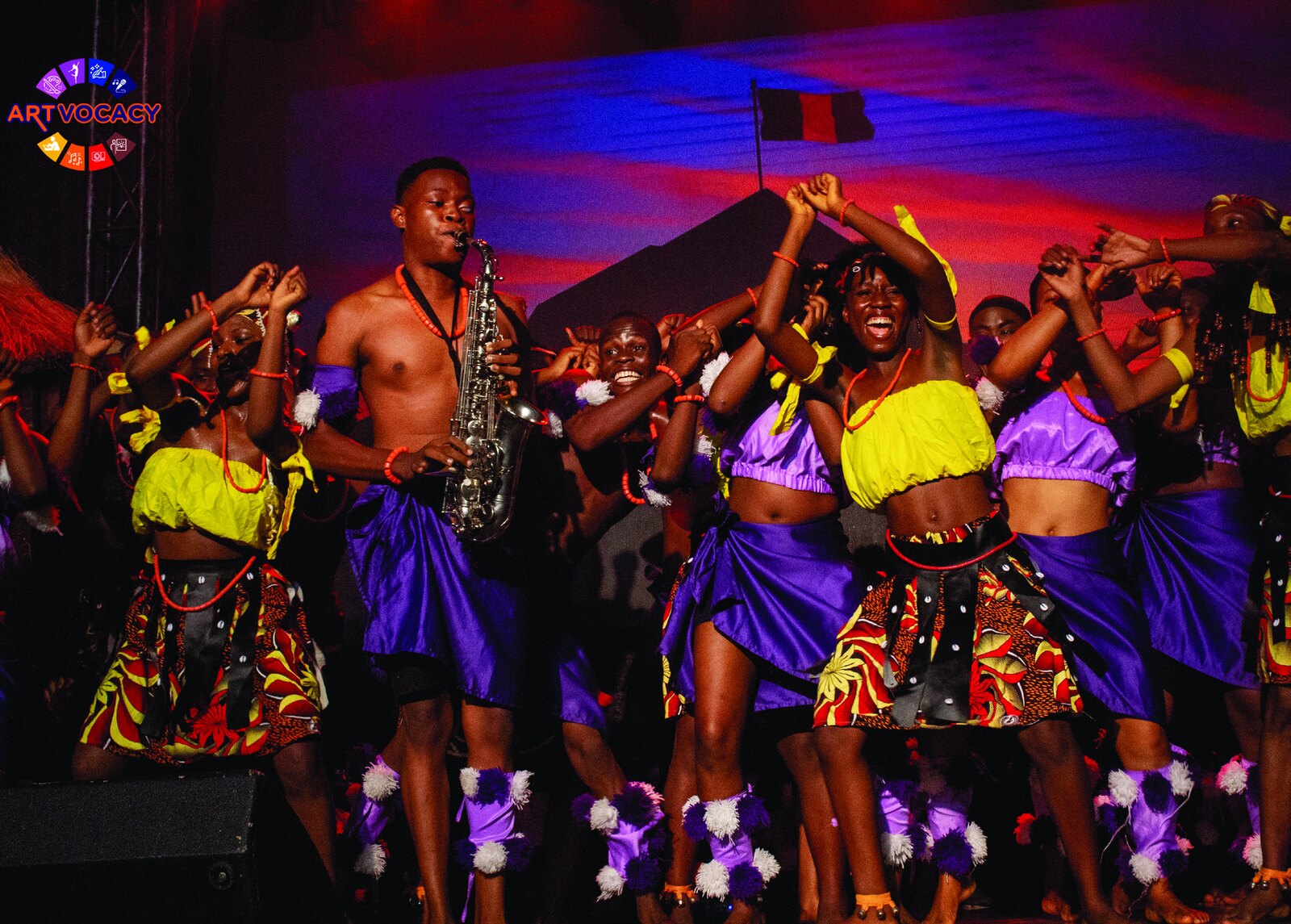
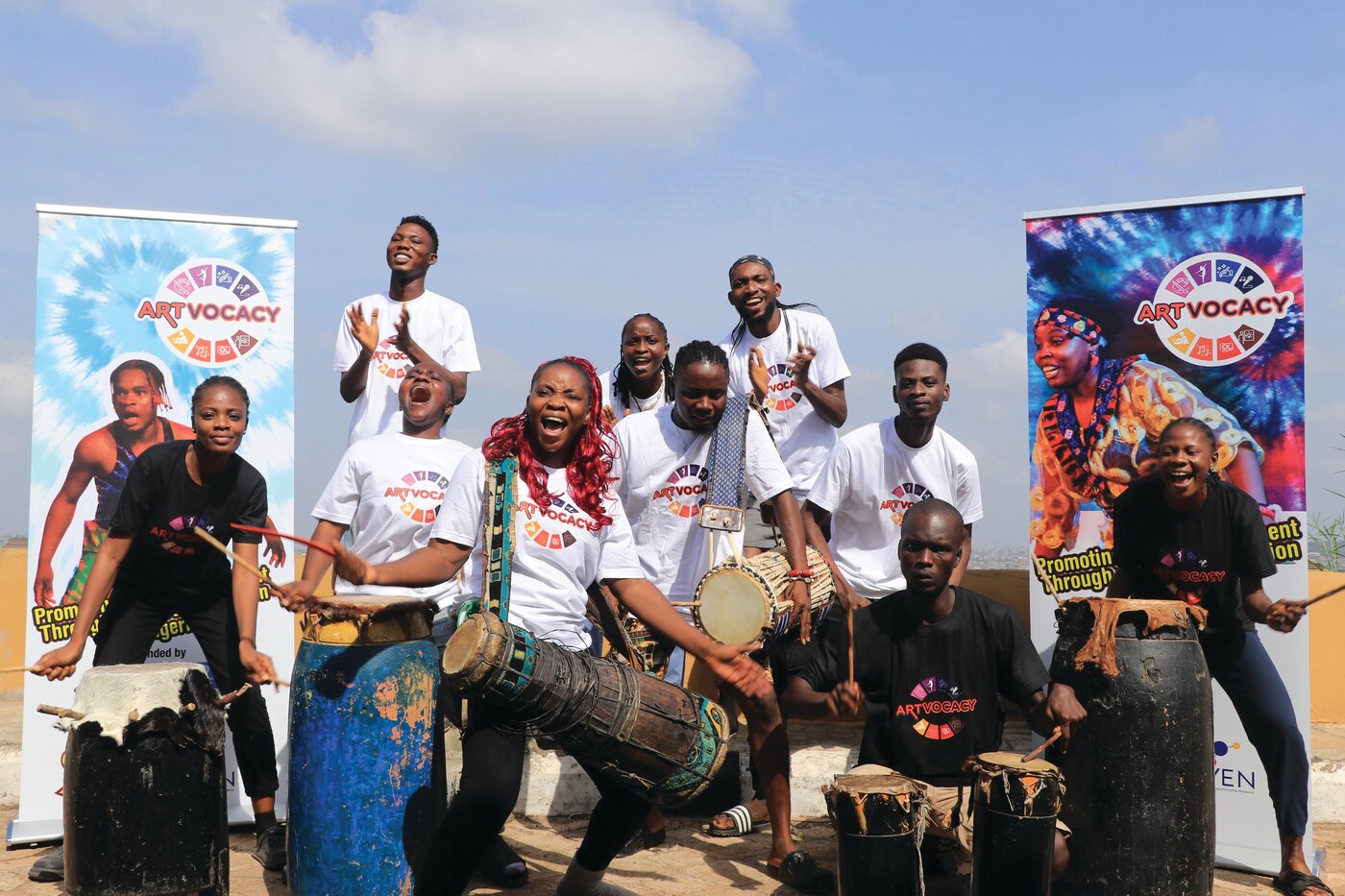
Currently, I am spearheading a nationwide youth movement called the "ARTvocacy Movement" (infusion of performing arts and advocacy for social justice). I designed this idea while participating in a nationwide protest against youth profiling, police brutality, youth disenfranchisement, bad governance, and the alarming level of poverty. I live in a country where human rights are repressed, brutal economic disparity is a norm, and undemocratic practices have been institutionalized. I decided to use my artistic talents and creativity to start speaking up and advocating for social justice.
This has attracted hundreds of other young artists across different regions in my country, and now we have a grassroots youth movement of performing artists who are now using music, dance, drama, poetry, theatre, films, photography, and painting as a form of protest and speaking truth to power.
Our mandate is to deploy the concept of socially engaged arts in order to bring artists and communities together to collaborate and address social, political, and cultural issues through artistic collaboration. Our methodology is rooted in youth co-creation and participation, hence our creative practices foster dialogue, change perspectives, and spark positive social change, paving the way towards a more equitable and connected future.
How does the Youth ARTvocacy program navigate relationships with local authorities while maintaining an expressive safe space for young people?
We have a strategy called "Artistic activism". It is activism that doesn't look like activism and art that doesn't look like art. The ability of artistic activism to surprise us — to show up in unlikely places (e.g., not a gallery) or take on unfamiliar forms (e.g., not a protest march) provides an opportunity to disrupt people's preconceived notions of art and protest, and their predetermined ideas about the messages we are trying to communicate.
Artistic activism creates an opportunity to bypass seemingly fixed political ideas and moral ideals and remap cognitive patterns. Surprise is a moment when hearts can be touched and minds reached, and both changed. Artistic activism's ability to escape easy categorization is a benefit in societies where protest is commonplace.
Whereas traditional forms of protest, like marches, need to constantly increase in size or scope, or descend into violence, to become noticed (and newsworthy), the creative innovation at the heart of artistic activism provides something uncommon, or out of place, that can attract attention and become memorable. The boundary slippage of artistic activism works equally well in repressive regimes where overt political protest is prohibited, yet artistic practices are tolerated. Slipping under the radar, artistic activism is not identified as "politics" to authorities, while still being able to communicate a social message to the public.
What are some examples of how Street Project Foundation's artistic activism influenced a social justice outcome or a local policy shift?
Our activism and advocacy campaign efforts, in conjunction with allies, played key roles in bringing about these landmark changes in Nigeria:
It's remarkable to see such a comprehensive array of policy wins. In a climate where young people feel unheard and marginalized by systems shaping their lives, how does your methodology support trust and collaboration for youth to use their creativity as a platform for social change?
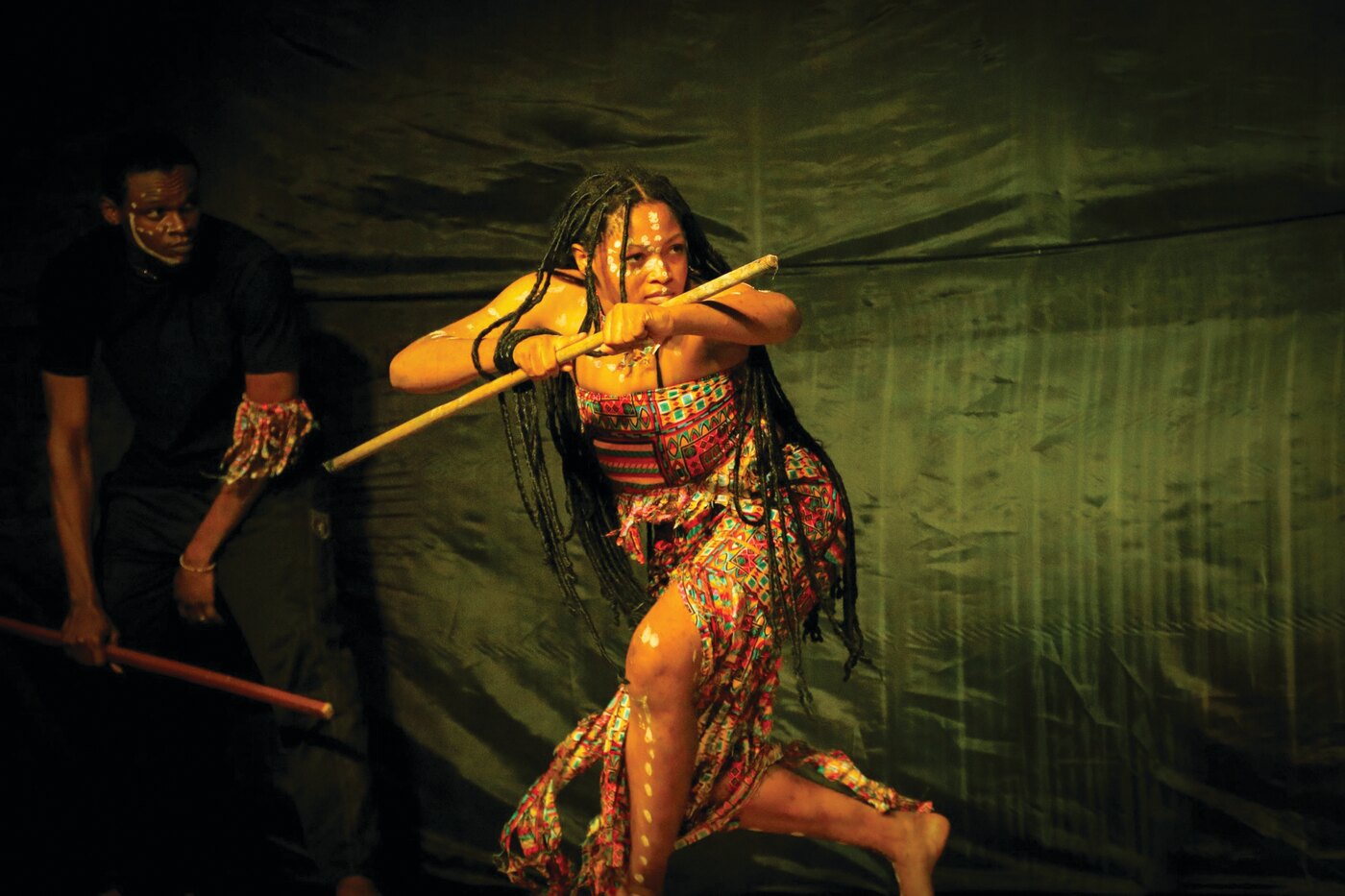
Co-creation in youth arts programs empowers participants by treating them as active creators rather than passive recipients, fostering agency, skill development, and social connection. It builds trust, enhances critical thinking, and ensures diverse, authentic voices shape the final artistic output, fostering a deep sense of ownership and community.
Take for example, many Nigerian older youths who are between the ages of 16 to 25 feel abandoned, shortchanged, and maltreated by the political system in Nigeria. Consequently, there is a disconnect between young people and the government, as they commonly do not have trust or confidence in policymakers and political leaders. Concerningly, unemployment and police brutality are at an all-time high, compounded by a lack of access to education and healthcare. So, when myself and my team provide a creative platform that encourages young people to speak up and not shut up on issues that concern them and their welfare and a platform that amplifies their voices, they immediately gravitate towards us.
Because creativity is at the core of our essence, our methodology encourages strength from diversity and peer-to-peer learning. We know working with people from different fields or backgrounds can be daunting. Yet, co-creation can help youth to embrace such differences. It provides opportunities to uplift one another's strengths, and through this, to innovate novel solutions together. Underlying this ability to hold space for one another's strengths to shine through is the major "win" of our strategy. Young people in our programs quickly understand that they are peers to one another and work together in a non-hierarchical manner.
What does this look like in practice?
I deploy the following innovative measures:
Please tell us about the NAIJA Youth Entrepreneurship Network (NYEN).
NAIJA Youth Entrepreneurship Network (NYEN) is a sister organization of Street Project Foundation. I founded NYEN in 2014 to educate and empower creative young people especially espousing the concept of social entrepreneurship. We focus on teaching young people how to build mission-driven, innovative businesses that prioritize solving societal and environmental problems over maximizing profit. By applying business principles to social issues, these budding entrepreneurs create sustainable, often for-profit models that generate positive change, such as poverty alleviation, education, and environmental protection. We are currently active in ten cities across the country.
Who are some of Street Project Foundation's collaborators?
Over the last decade we have worked with development partners such as OXFAM, United Nations Democracy Fund (UNDEF), United States Department of State, Netherlands Ministry of Foreign Affairs, World Connect, Freedom Fund, FREE Fund, Karibu Foundation, Moleskine Foundation, and Lagos State Government, amongst others.
You've expanded to nine cities in a very high-stakes environment. What have you learned along the way from young people, including about scaling a movement that relies on trust?
I have learned that you cannot script trust, especially in a high-risk environment where intuition is a survival skill. Since our work relies on deep trust, not manuals, I struggle with scaling our intangible essence. We currently have nine chapters across nine cities. My vision is to engage 1 million youths by 2030 using creative arts for social justice advocacy.
However, Nigeria is a repressive state where civic education through art attracts censorship. I fear a tactical error by a new chapter could expose young artists to censure and harassment. Further, our work is experiential and improvisational. As we expand, I face a challenge of transmission: How do I transfer non-codified knowledge without diluting its power? If I cannot solve this equation, I risk building a movement that looks like us on the surface but lacks the discipline to survive in a repressive context.
How have you approached expanding your work in the context of this challenging environment?
I initially responded to expansion by attempting to codify the essence of our programming into administrative blueprints. I created standardized manuals to replicate success, but this failed. I discovered that our methodology — rooted in social therapeutics and improvisation — is relational, not transactional. It resists rigid codification.
What has worked is deep mentorship of young people by my core team of nine leaders along with establishing a Youth Advisory Board. When we invest in young people's emotional well-being, and support their personal development, and leadership maturity, they thrive.
Furthermore, I know that true movement-building requires me, as the program leader, to become less central. The difficulty lies in evolving from being the "guarantor of safety" to the "architect of resilient systems." I am transitioning from the exhaustion of omnipresence to the freedom of shared ownership. This has enabled me to become a catalyst, not a commander-in-chief.
I understand that you are a poet. How does your artistry influence how you work with young people?
For me as a poet, creativity acts as a foundational, energetic, and restorative force in working with young people, moving beyond artistic output to cultivate essential life skills and deeper connections. By utilizing creative approaches, I foster resilience, enhance emotional intelligence, and provide a safe space for self-expression, particularly for those facing challenges or from disadvantaged backgrounds.
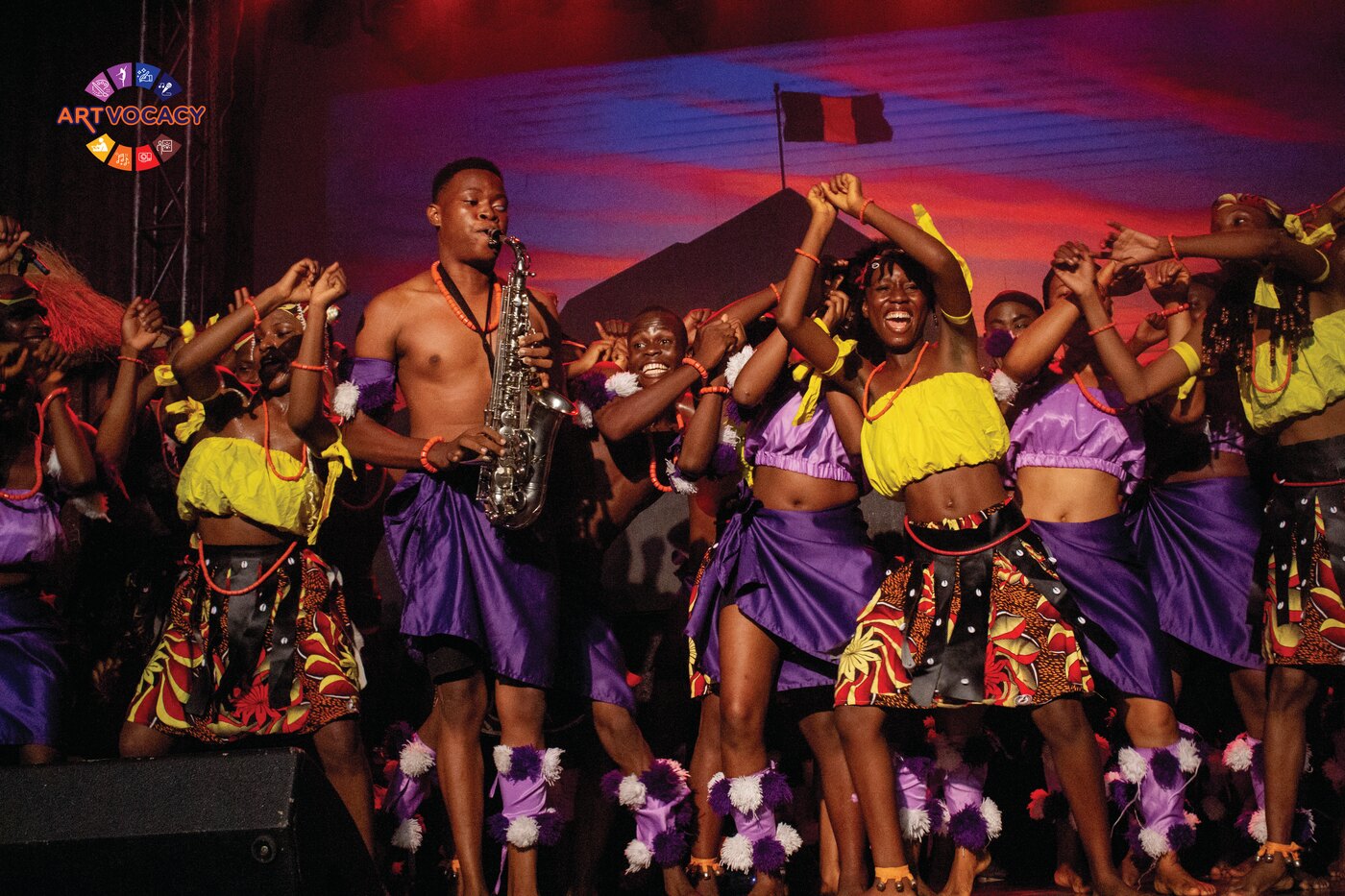
As an artist, I naturally turn to creative expression as a means to engage young people in civic life. The essence of my work revolves around promoting youth creative expression for civic engagement. I love providing platforms for creative youths to use their various artistic talents and skill-sets for social justice advocacy. I make sure to provide safe spaces where creative thinking and content creation through the lens of artistic activism are paramount. This has helped solidify the ARTvocacy Movement as a robust grassroots, youth-led movement of young changemakers whose creative content promotes the ideals of democracy and social justice. Young ARTvocacy participants motivate other young people across the country to become active citizens and engage in the political process of the country instead of being passive and uncommitted.
Is there anything else that you would like a global readership of Extensions Magazine to know about your work with young people in Nigeria?
I am intrigued by the possibilities of a cross-cultural exchange project spanning different continents — imagine cohorts of creative young people from different racial and cultural backgrounds collaborating and co-creating compelling content together.
My team and I are looking for partners to organize the first international edition of our flagship initiative, ARTvocacy, which uses the creative arts to advocate for social justice. Over the past two years, we have expanded ARTvocacy to eight chapters nationwide in Nigeria, reaching over 20,000 young people across the country's Northern and Southern regions. Now we feel inspired to take it to the global stage.
For this global edition, we are interested in exploring topics such as racism, extremism, migration, global citizenship, pluralism, peace building, conflict resolution, and cross-cultural dialogue — using our award-winning methodology that infuses music, drama, dance, poetry, photography, painting, and film-making.
The idea is to assemble twenty-five talented young people from Nigeria and another country in a four-to-six week co-creation camp. Together they will produce a stage play, a theme song, and a music video, culminating in a public showcase that will also serve as their graduation ceremony.
The potential for significant, ground-breaking impact is real. If you are reading this from any part of the globe and feel inspired, reach out — let's explore together.
Thank you for sharing your work with us. It has been a pleasure to be in conversation with you.
The pleasure is all mine! Thank you for a stimulating conversation.