When the Transition from School to Work Breaks Down
For people in my generation — those born in the mid-1970s — our late teens and early twenties felt like a golden age. Everything seemed full of possibility. Even if things didn't go well, it never felt like the game was over. There was always time to try again.
Many young people in Korea today feel the opposite.
For them, it can feel as though the game has already ended — and that the future will only get worse. Some describe their lives as if adolescence itself has been extended, with adulthood perpetually out of reach.
This isn't just a personal impression. The data tells a similar story.
South Korea has one of the highest rates of youth classified as NEET — not in education, employment, or training — among OECD countries. Labor surveys show a rapidly growing number of young people responding simply that they are "resting." About 5 percent rarely leave home or participate in social life for six months or longer. The youth suicide rate has also reached 22.6 per 100,000 people, the highest among OECD countries.
When young people lose confidence in work, feel barriers in relationships, and experience exclusion from society, regression can happen quickly. And once someone falls off track, helping them return to a path toward the future becomes incredibly difficult.
This is why we at the Haja Center focus on supporting 19–24-year-olds during one of the most fragile periods of life: the transition from school to work.
Haja Center: "Let's Do Something — Right Now"
Since 2009, I have worked at the Seoul Career Center for Youth & Future, founded in 1999 through a partnership between Yonsei University and the Seoul Metropolitan Government. Most people, however, know it by its nickname: Haja Center.
In Korean, haja means something like "Let's do something — right now." It reflects a spirit of action — moving forward without hesitation or fear.
Our founder, Professor Chohan Haejoan, believed that the young people often misunderstood by older generations should not be seen as problems, but as untapped resources. With that belief, she helped create an innovative learning ecosystem built specifically for young people.
During its first decade, Haja Center focused on nurturing creative individuals. Alumni from that era include Moon Ji-won, writer of the global Netflix hit Extraordinary Attorney Woo; Oh Yoon-dong, a director behind concert films for many K-pop stars like BTS and Black Pink; and writer Lee Seul Ah, whose work once topped reader-voted literary rankings.
In its second decade, the center began championing social creativity — supporting the launch of more than ten social enterprises and nurturing a generation of civic activists.
Now, in its third decade, Haja Center is pursuing a broader vision: an inclusive learning ecosystem where creativity and care reinforce one another.
Producing a handful of standout leaders in the cultural sector or civil society is certainly meaningful. But over time, we came to believe that something else might matter even more: preventing ordinary young people from becoming stuck — or slipping backward — before their lives have really begun.
The Arrival of a Low-Gravity Era
Looking ahead, I believe more young people — not only in Korea, but around the world — will struggle with this transition and find themselves drifting without a clear sense of grounding.
To be honest, I often felt that way myself well into my twenties. I graduated from a respected university and even landed a job at Samsung. Yet I often felt lonely and lacked confidence.
What kept me from completely drifting were three forces that pulled me back to the ground.
The first was the gravity of work — the joy of creating music with my own hands.
The second was the gravity of relationships — work became a bridge that helped someone like me, who struggled socially, connect with others.
The third was the gravity of values and culture — a sense that even when things were difficult, the direction I was pursuing still mattered.
These three forces slowly anchored me.
Today, however, these forms of gravity are weakening for many young people. It's almost as if they are living on the moon, where gravity is far weaker than on Earth.
At the same time, the world is approaching a massive transformation driven by artificial intelligence. In the coming years, both economic survival and personal uniqueness may become harder to sustain.
So when the gravitational pull of work, relationships, and values weakens — and young people drift into unemployment, isolation, and social disorientation — what should we do?
The Inspire × Haja Project
At Haja Center, we try to strengthen these three forms of gravity through three key elements.
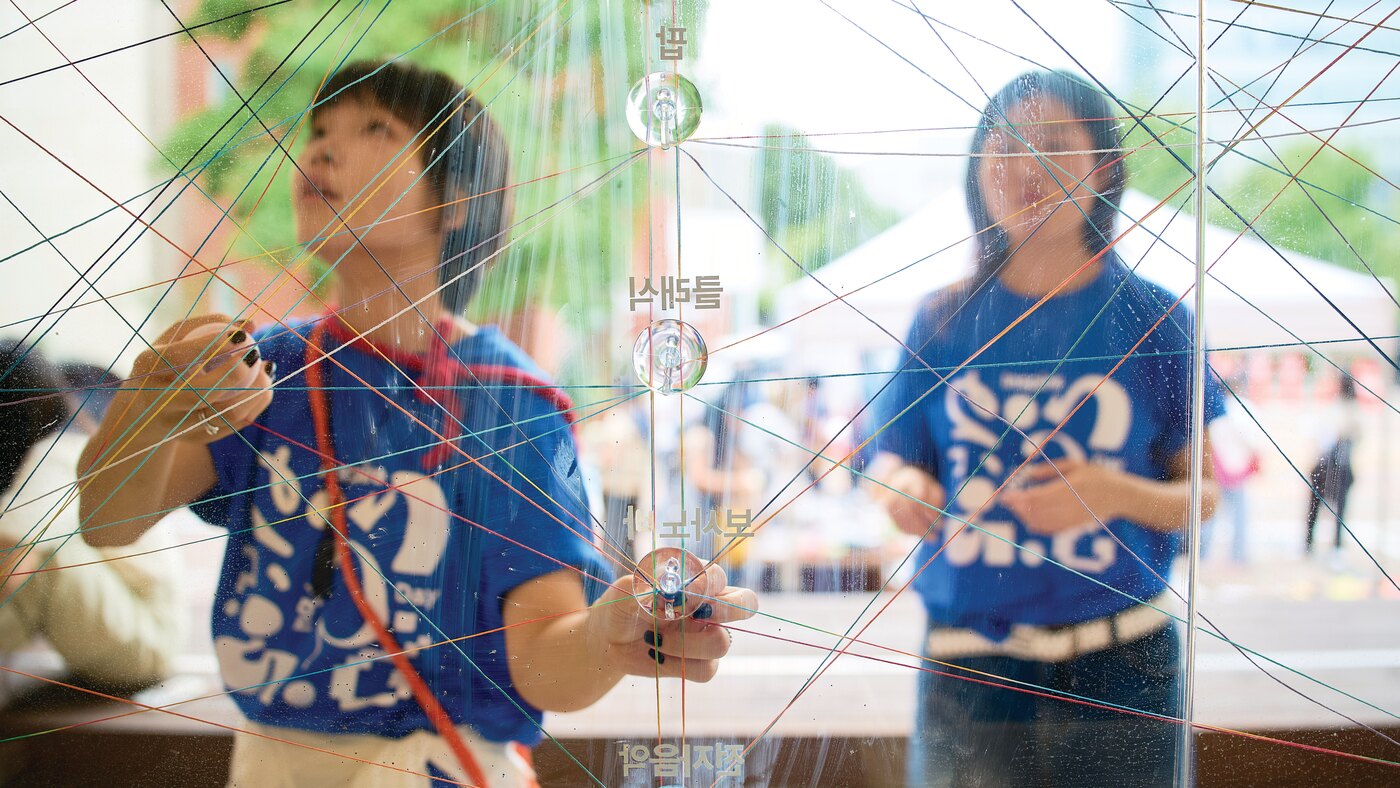
First, rather than focusing only on intangible digital spaces, we emphasize craft — hands-on, tangible forms of making that strengthen the gravity of work.
Second, young people meet peers who share similar interests. Through honest feedback and collaboration, they build the gravity of relationships.
Third, through both online and offline stages, they connect their work with the wider world, creating the gravity of culture.
Interestingly, the Creative Youth Development (CYD) framework — Create, Connect, Catalyze — closely mirrors our own philosophy of work, relationships, and culture.
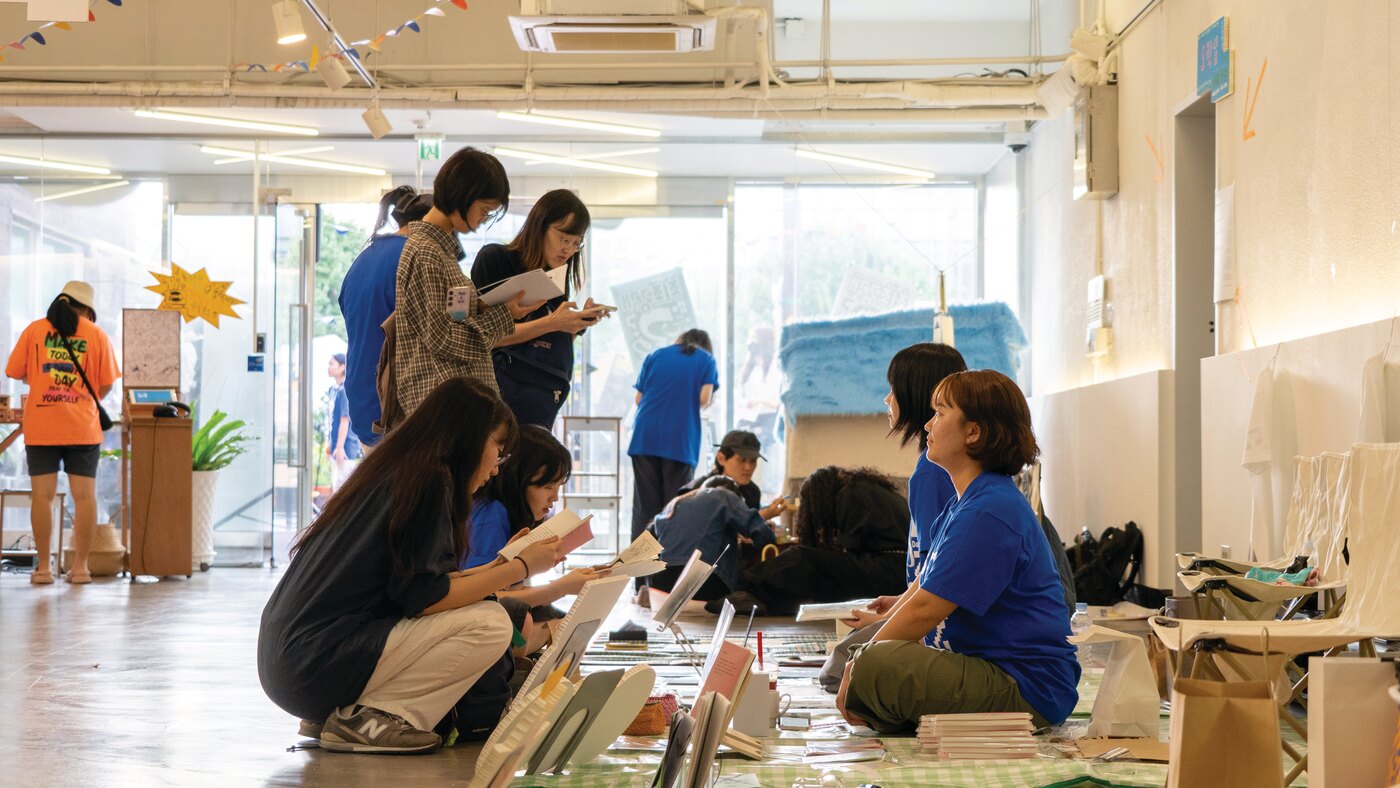
One program category that brings all three elements together is the Future Career Studio. These programs go beyond traditional arts education. They immerse young people in cross-disciplinary creative work that requires something closer to craftsmanship — a deep, hands-on commitment to making.
Over the years we have run studios ranging from 10 sessions to 100 sessions in fields such as visual art, music, writing, and new media.
Beginning in 2024, with support from The Burberry Foundation, we have also launched Future Career Internships for participants who complete these programs. Youth interns began producing Instagram content themselves, increasing followers by 44 percent. More importantly, their stories of career exploration have helped other young people imagine new possibilities for their own futures.
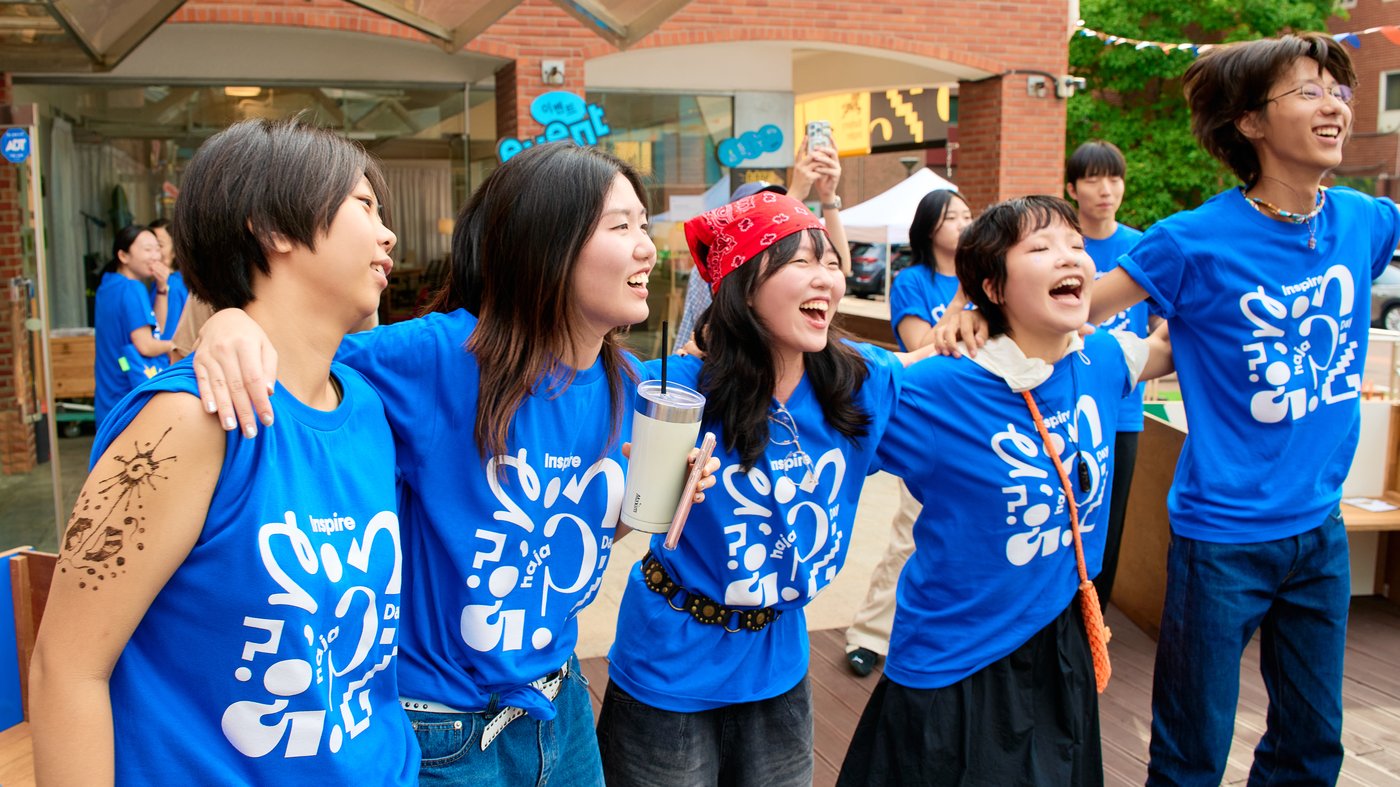
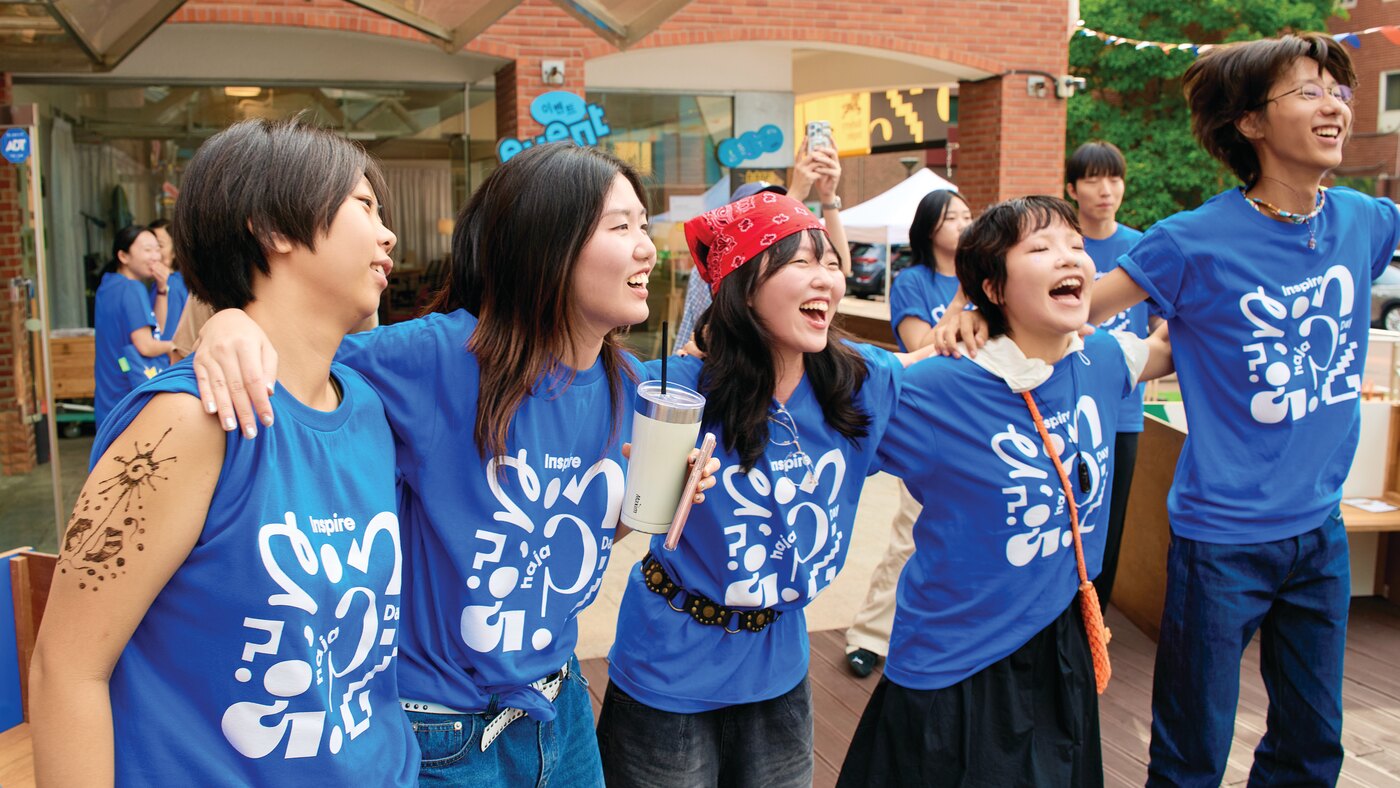
We also host Future Career Gatherings — events such as art markets, networking meetups, and rock festivals — so that young people can easily find their way into this community.
Last year we opened Inspire Salon, a "third place" where young people can rest outside the pressure of competition and desperate effort. This year we are launching Future Lab, a space for design and creative production.
We are also beginning full operations of the Future Career Collective, a guild-like network where young creators can organize teams, curate exhibitions, and take the lead in shaping their own projects.
A Third Career Campus for a New Generation
Researchers who studied Haja Center described it as a place that helps young people accumulate "dream capital" within a safe space. One young participant once told us it felt like an "adventurer's village" — a place where you stop before setting out on the long journey of life to learn skills, find teammates, and discover your direction.
In a society like Korea's, where success is often measured by producing the best outcomes through competition, places like Haja Center can sometimes feel lonely. Many people — even young people themselves — believe that no matter how meaningful the process is, you cannot survive without strong results.
But in the near future, most humans may belong to the same category: people who cannot produce better outputs than artificial intelligence.
No one really knows where this civilizational transition will lead us. In times like these, perhaps what matters most is focusing on the process — and on the transition itself.
The ability to navigate uncertainty comes from the spirit of haja: trying something now rather than hesitating.
As historian Yuval Noah Harari has argued, uncertainty may be the only certainty of our time. Young people today need mental muscles and career resilience to move through that uncertainty.
Young people in transition need to feel fully understood. In an era when entire generations risk being marginalized by the AI transformation, we need to come closer than ever to the reference points that shape their lives.
If families and schools cannot provide a full sense of belonging, then we must create third places where they can gather. If competition and exclusion no longer work as forces that push people forward, we must rely on the pulling forces (gravity) of safety and inclusion instead.
In an age of fragmented time and crowded minds, young people need a center of gravity, something that holds them.
A place that gently pulls drifting lives into a stable orbit.
At Haja Center, we are beginning to call that place a "Third Career Campus."
And we would like to imagine what that could become — together with people around the world.